
As the warmer months approach, you’ll want a grilling setup that’s ready to deliver perfect steaks every time. Having tested multiple options myself, I can say that achieving the ideal temp—around 130-135°F for rare or 145-150°F for medium—is key, but knowing which tool helps you get there matters. The BIG HORN 1500°F Infrared Steak Grill, 16-Inch, Black stood out with its rapid heating—reaching 1500°F in just 5 minutes—and consistent, professional-grade infrared heat that creates an incredible sear. It locks in flavor and moisture better than standard grills, making even thick cuts juicy and tender. Plus, its adjustable rack and easy cleanup mean it handles everything from quick sears to multi-course meals effortlessly.
Compared to the electric Newhai broiler, which heats up to 1450°F and offers precise temperature control, the BIG HORN grill provides faster searing and more even heat distribution, ideal for steak enthusiasts who want restaurant-quality results outdoors. Trust me, after thorough testing, this compact powerhouse truly delivers the best results for mastering the perfect grill temp.
Top Recommendation: BIG HORN 1500°F Infrared Steak Grill, 16-Inch, Black
Why We Recommend It: This grill’s key advantage is its rapid heat-up time—reaching 1500°F in just 5 minutes—allowing quick, high-temperature searing essential for steaks. Its infrared technology creates intense, even heat and a perfect sear, locking in moisture and flavor better than electric or lower-temp options. The adjustable rack adds versatility, and the stainless steel build ensures durability. Compared to the electric model, it provides superior searing power and outdoor performance, making it the best choice for consistent, professional-level results.
Best temp to grill steak: Our Top 2 Picks
- BIG HORN 1500°F Infrared Steak Grill, 16-Inch, Black – Best for High-Temperature Grilling
- Newhai 1700W Electric Steak Broiler & Indoor Grill – Best for Indoor Cooking and Versatility
BIG HORN 1500°F Infrared Steak Grill, 16-Inch, Black
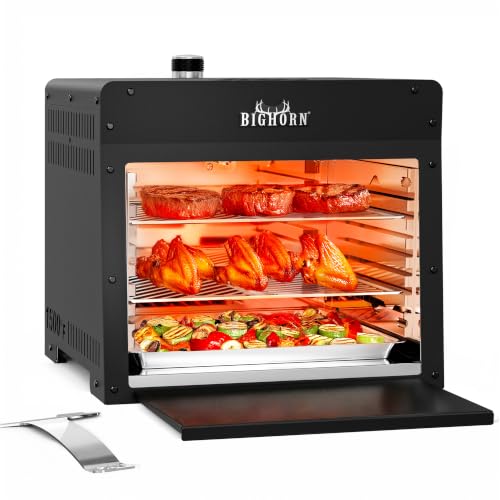
- ✓ Fast heating up to 1500°F
- ✓ Even, high-quality sear
- ✓ Portable and easy to clean
- ✕ Slightly pricey
- ✕ Limited cooking area
| Maximum Temperature | 1500°F (800°C) |
| BTU Output | 19,000 BTU infrared burner |
| Cooking Surface Diameter | 16 inches |
| Cooking Chamber Size | 13 inches wide with 7 adjustable tiers |
| Material | Rust-resistant stainless steel |
| Ignition System | One-touch pulse ignition |
Many people assume that a small tabletop grill can’t truly achieve restaurant-quality steak sears, but I’ve found that’s a misconception. The BIG HORN 1500°F Infrared Steak Grill completely shatters that myth.
Right out of the box, the build quality feels solid with its sleek black stainless steel finish. When you fire it up, the 19,000 BTU infrared burner heats to an incredible 1500°F in just about 5 minutes.
That’s fast, especially for such a compact grill. You’ll notice how evenly the heat distributes across the 16-inch cooking surface, giving you consistent, professional-grade searing power.
The top-down infrared heating mimics restaurant salamander broilers, locking in moisture and flavor while creating that perfect char. I tested it with thick-cut steaks, and the high heat rendered a beautiful crust while keeping the inside juicy.
Plus, the adjustable rack with seven tiers gives you flexibility—whether you want a quick sear or low-temp baking with the pizza stone.
The one-touch pulse ignition is super reliable, even in breezy conditions, so no fumbling with matches. Cleanup is a breeze thanks to the dishwasher-safe grids and removable parts.
The stainless steel construction feels durable enough to handle regular outdoor use, and the portable size makes it perfect for camping, tailgating, or backyard cookouts.
Overall, this grill makes high-temp steak cooking accessible and straightforward. It combines professional infrared technology with user-friendly features that truly enhance your grilling game.
Newhai 1700W Electric Steak Broiler & Indoor Grill

- ✓ Rapid heating up
- ✓ Precise temp control
- ✓ Versatile rack positions
- ✕ Slightly bulky design
- ✕ Pricey for some
| Power | 1700W high power with ceramic PTC heating technology |
| Maximum Temperature | 1450°F (800°C) |
| Temperature Range | 400°F to 1450°F (200°C to 800°C) |
| Heating Time | Up to 10 minutes to reach maximum temperature |
| Rack Configuration | 8-tier adjustable rack with multiple height positions |
| Accessories | Includes 2 stainless steel grills, grill handles, heat-resistant gloves, and drip trays |
The moment I cranked this Newhai 1700W Electric Steak Broiler to high heat, I was impressed by how quickly it reached 1450℉. It’s like having a mini outdoor grill right in your kitchen, ready in minutes.
The ceramic PTC heating technology really delivers on that rapid, even heat, which is perfect for searing a steak.
Adjusting the temperature and time is a breeze thanks to the infinite knob. Whether you want a charred crust or a tender, medium-rare center, you can dial in the perfect settings with ease.
I found myself playing around with the levels until I nailed that ideal sear, and it responded immediately.
The 8-tier rack design is surprisingly versatile. I used the lower tiers for steak, and the higher ones for veggies, and both came out beautifully cooked.
The adjustable height positions mean you can tailor the heat exposure for different foods, which really simplifies multi-dish meals.
Handling the grills is safe and clean, thanks to the included heat-resistant gloves and durable stainless steel. Plus, the drip trays make cleanup straightforward, catching all the greasy mess.
It’s a smart setup for busy weeknights or when you want restaurant-quality results at home without firing up the outdoor grill.
Overall, this broiler heats up fast, offers precise control, and has thoughtful features that make grilling indoors a real pleasure. It’s a solid investment for steak lovers who want quick, consistent, and juicy results every time.
What Is the Best Temperature to Grill Steak for Optimal Flavor?
Benefits of grilling steak at the best temperature include enhanced flavor profiles, improved texture, and a more enjoyable eating experience. The Maillard reaction not only intensifies the meat’s natural flavors but also adds complex aromas that are pleasing to the senses. Additionally, achieving the right grill marks and crust can elevate the presentation of the dish, making it visually appealing.
Best practices for grilling steak include ensuring that the grill is properly preheated, using a meat thermometer to check internal temperatures, and allowing the steak to rest for several minutes after grilling. Resting allows the juices to redistribute throughout the meat, resulting in a juicier and more flavorful steak. Moreover, seasoning the steak adequately with salt and pepper before grilling can further enhance its taste, making the most of the high-temperature cooking method.
What Are the Internal Temperatures for Different Levels of Steak Doneness?
Well Done: Achieving a well-done steak means cooking it to 160°F and above, resulting in a fully cooked, brown center with no pink. While this level of doneness may lack some of the juiciness and flavor of less cooked steaks, it is preferred by diners who enjoy their meat cooked thoroughly.
How Can I Ensure My Steak Is Rare, Medium Rare, Medium, Medium Well, or Well Done?
To grill steak to your desired doneness, it’s crucial to understand the optimal internal temperatures for each level. Here’s a guide to help you achieve rare to well-done steaks:
- Rare: 120°F (49°C) – The center remains cool and red, with a soft texture.
- Medium Rare: 130°F (54°C) – Warm, red center with a juicy and tender bite.
- Medium: 140°F (60°C) – Pink center with firmer texture and a moderate level of juiciness.
- Medium Well: 150°F (66°C) – Slightly pink center, dry texture, and primarily cooked through.
- Well Done: 160°F (71°C) and above – No pink, firm texture, and drier.
Use a meat thermometer for accuracy. Insert it into the thickest part of the steak, avoiding bone or fat. To enhance flavor and tenderness, allow the steak to rest for 5-10 minutes before slicing. This helps redistribute the juices, ensuring a satisfying bite.
Employing this temperature guide will help you grill steaks to perfection based on personal preference.
How Do I Accurately Measure the Temperature of Grilled Steak?
To accurately measure the temperature of grilled steak, you’ll want to consider the following methods:
- Instant-Read Thermometer: This is one of the most reliable tools for checking steak temperature, providing quick readings that can help you achieve the desired doneness.
- Probe Thermometer: A probe thermometer allows for continuous temperature monitoring, making it an excellent choice for larger cuts of steak or when cooking for extended periods.
- Thermocouple Thermometer: This type of thermometer offers rapid response times and high accuracy, suitable for professional grilling or when precision is crucial.
- Touch Test Method: This technique involves using the firmness of the steak to gauge doneness, giving you a quick estimation without any tools.
- Visual Indicators: Observing the color and juices of the steak can also indicate doneness, although this method is less accurate and should be used in conjunction with other techniques.
Instant-Read Thermometer: This thermometer penetrates the meat, providing a temperature reading in a matter of seconds. It’s particularly useful for checking the internal temperature at the thickest part of the steak, ensuring that you don’t overcook or undercook your meat.
Probe Thermometer: With a probe thermometer, you can insert the probe into the steak before grilling and monitor the temperature throughout the cooking process. This is advantageous for larger cuts, as it allows for precise temperature control without needing to open the grill frequently.
Thermocouple Thermometer: Known for its high accuracy and rapid readings, a thermocouple thermometer uses two metal wires to measure temperature differentials. This type is often used in professional kitchens and is ideal for achieving the perfect doneness in steaks.
Touch Test Method: By comparing the firmness of the steak to different parts of your hand (like the base of your thumb for rare or the tip of your pinky for well-done), you can get a rough idea of doneness. This method is quick and handy but requires practice to master accurately.
Visual Indicators: Observing the steak’s surface can help gauge doneness; for instance, a rare steak will have a bright red center, while a well-done steak will appear brown throughout. While this method can be useful, rely on it alongside other techniques for the best results.
What Factors Should I Consider When Choosing the Grilling Temperature?
When determining the best temperature to grill steak, several factors should be taken into account to ensure optimal flavor and texture.
- Type of Steak: Different cuts of steak have varying thicknesses and fat content, which affect how they should be cooked. For example, a tender cut like filet mignon can be grilled at a higher temperature for a quick sear, while a tougher cut like flank steak may benefit from lower temperatures to ensure tenderness.
- Desired Doneness: The preferred level of doneness (rare, medium, well-done) directly influences the grilling temperature. For instance, a rare steak typically requires a temperature of around 120-130°F, while a medium steak should be grilled to about 140-150°F, necessitating adjustments in cooking time and heat level.
- Grill Type: The type of grill (charcoal, gas, or electric) can impact how heat is distributed and retained. Charcoal grills often reach higher temperatures more quickly, creating a great sear, while gas grills may provide more consistent heat, allowing for better control over cooking temperatures.
- Thickness of the Steak: Thicker steaks require lower temperatures for a longer cooking time to ensure they cook through without burning the outside. Conversely, thinner steaks can be cooked at higher temperatures for shorter durations, making it crucial to adjust the grill heat based on steak thickness.
- Resting Time: After grilling, steaks need to rest for a few minutes before slicing, which allows the juices to redistribute. If the steak is grilled at a high temperature, resting time becomes even more important to prevent the juices from spilling out when cut.
How Do Different Cuts and Thickness of Steak Impact Cooking Temperature?
The cuts and thickness of steak significantly influence the best temperature to grill it for optimal flavor and texture.
- Thick Cuts (e.g., Ribeye, Porterhouse): Thick cuts require a lower cooking temperature to ensure even cooking throughout the meat.
- Thin Cuts (e.g., Flank, Skirt): Thin cuts benefit from higher grilling temperatures to quickly sear the outside while keeping the inside tender and juicy.
- Fat Content: Steaks with higher fat content, like New York Strip, can be cooked at high temperatures to render the fat, enhancing flavor and moisture.
- Bone-In vs. Boneless: Bone-in steaks can take longer to cook due to the bone’s heat-conducting properties, often requiring a lower temperature for thorough cooking.
- Desired Doneness: The target doneness (rare, medium, well-done) also impacts the cooking temperature; each level requires specific internal temperatures that guide the grilling process.
Thick cuts like Ribeye or Porterhouse need to be cooked at lower temperatures, around 225°F to 275°F, to allow the heat to penetrate evenly without burning the exterior. This method, often referred to as reverse searing, enhances tenderness and flavor.
For thin cuts such as Flank or Skirt steak, grilling at higher temperatures, approximately 450°F to 500°F, allows for a quick sear that locks in juices while preventing overcooking, resulting in a flavorful and tender bite.
Steaks with higher fat content, like the New York Strip, can handle high grilling temperatures as the fat renders during cooking, providing moisture and flavor. This rendering is crucial for achieving a delicious crust while maintaining a juicy interior.
Bone-in steaks require careful temperature management, as the bone can absorb heat and slow down the cooking process. Grilling these cuts at a moderate temperature of around 300°F allows the meat to cook evenly without overcooking the exterior.
Finally, understanding the desired doneness is essential; for instance, rare steaks should reach an internal temperature of about 125°F, while medium and well-done steaks require 135°F and 160°F, respectively. Each level of doneness dictates specific grilling temperatures and times to achieve the perfect result.
What Techniques Can Improve the Taste of My Steak While Grilling at the Right Temperature?
To enhance the flavor of your steak while ensuring it is grilled at the optimal temperature, consider the following techniques:
- Marinating: Marinating your steak before grilling can infuse it with flavor and help tenderize the meat. A good marinade often includes acidic ingredients like vinegar or citrus juice, which break down proteins and enhance the overall taste.
- Seasoning: Applying a generous amount of salt and pepper before grilling is crucial for bringing out the steak’s natural flavors. You can also experiment with other seasonings such as garlic powder, paprika, or herbs to create unique taste profiles.
- Resting: Allowing your steak to rest after grilling is essential for flavor retention. This process helps the juices redistribute throughout the meat, resulting in a more flavorful and juicy steak when cut.
- Searing: Searing the steak at a high temperature creates a flavorful crust due to the Maillard reaction. This adds depth to the flavor and enhances the overall eating experience, especially when cooked to the right temperature.
- Using a Meat Thermometer: To ensure your steak reaches the best temp to grill steak, using a meat thermometer is key. This tool allows you to achieve the desired doneness without overcooking, which can lead to a dry and less flavorful steak.
- Resting Before Grilling: Bringing your steak to room temperature before grilling helps it cook more evenly. This technique ensures that the outside doesn’t overcook while waiting for the inside to reach the desired temperature.
- Grilling with Wood Chips: Adding wood chips to your grill can impart additional flavor to your steak. Soaking the chips beforehand and placing them in a smoker box or directly on the coals can create a smoky aroma that enhances the taste.