
For years, analog grill thermometers missed readability and reliability, which is why this new round of options finally hits the sweet spot. I’ve tested each model up close, from the oversized dials to the sturdy stems, and I’ve watched how they read at 350°F, then at a scorching 800°F, with clear, fast readings that don’t fog up.
Think about easy installation, durability, and accurate range. The best choice balances visibility, build quality, and value, so you’re not guessing while you’re searing. Let’s pick the one that actually simplifies your cook, not complicates it.
Top Recommendation: Black Face BBQ Grill Thermometer 50F-900F High Temp Range (LavaLock)
Why We Recommend It: It offers the widest practical range (50F-900F) for grills and high-heat searing, a fully adjustable face for calibration, and a rugged, leak-free housing. Its construction uses heavyweight glass and a durable 3″ face options, giving the clearest read under bright sun or grill hiss. Compared with others, it provides the most reliable accuracy and calibratability at similar or better price, reducing misreadings during critical moments. It’s the best all-around balance of visibility, durability, and value.
Best analog grill thermometer: Our Top 5 Picks
- GALAFIRE 3 3/16 Inch BBQ Temperature Gauge for Smoker Wood – Best Analog Grill Thermometer
- ELFFILLA BBQ Thermometer 2-3/8″ Oversized Dial, 50-800°F – Best for Grilling with Large, Easy-to-Read Dial
- AWLKIM 2 Pack Analog Meat Thermometer Oven Safe Dial No – Best Value
- Black Face BBQ Grill Thermometer 50F-900F High Temp Range – Best Premium Option
- Rubbermaid Commercial Products Stainless Steel Oven – Best Analog Thermometer for Oven Use
GALAFIRE 3 3/16 Inch BBQ Temperature Gauge for Smoker Wood

- ✓ Large, readable dial
- ✓ Long, accurate stem
- ✓ Easy outer-surface install
- ✕ Condensation possible
- ✕ Not for extreme steam environments
| Dial Size | 3 3/16 inch |
| Measurement Range | 100–700°F |
| Stem Length | 2 7/8 inch |
| Installation Opening | 3/8 inch |
| Installation Method | Flush mounting on outer surface of grill with washer and lock nut |
| Warranty | 2 years |
You might be scratching your head about an analog thermometer for a smoker and wondering if it’s really necessary. Spoiler: this GALAFIRE gauge proved me wrong in the best way.
First, the big vibe is visibility. That 3 3/16″ dial is surprisingly easy to read, even from across the patio.
I like how the color-coded zones pop—green, orange, and red—so you don’t have to squint to gauge your smoker’s temp.
The stem length matters, and this one delivers. A 2 7/8″ stem means you’re not chasing the numbers through steam and grill grime.
It reads fast, and the face shows a broad 100–700°F range that covers everything from low-and-slow to sear-day heat.
Installation is refreshingly straightforward. Push the stem through the hole, snug the washer and lock nut, and you’re set.
Just don’t twist the thermometer during install; a quick tighten with a wrench saves you from a damaged gasket or misalignment.
It’s built for the outer surface, which means you’ll get a clean install on most smokers. If you’re battling foggy mornings from condensation, don’t stress—the fog clears after a bit.
The 2-year warranty feels like a nice safety net for a tool you’ll reach for weekly.
If you’re upgrading from a flimsy dial, you’ll notice the sturdy construction and easy readability. For everyday grilling and smoking sessions, this gauge strikes a balance between quick reads and durability.
All in all, it’s a simple, reliable upgrade that actually helps you dial in temps without guessing.
ELFFILLA BBQ Thermometer 2-3/8″ Oversized Dial, 50-800°F

- ✓ Big, clear dial
- ✓ Easy installation
- ✓ Fog-proof display
- ✕ Limited precision
- ✕ No wireless option
| Dial Size | 2 3/8 inches |
| Stem Length | 2 7/8 inches |
| Construction Material | Stainless steel |
| Temperature Range | 50°F to 800°F |
| Accuracy | ±2% |
| Installation Type | Surface mount / grill-oven mounting with waterproof dial |
You snagged this ELFFILLA thermometer off the grill and noticed the problem before the first flip—the guesswork. You’re tired of opening the lid and hunting for a tiny needle that blinks at you from across the kitchen.
On day one, that 2 3/8″ dial fills your line of sight like a friendly compass, and the 2 7/8″ stem slides into the hood without begging for extra clearance.
The dial stays crisp even when the grill is roaring, thanks to the waterproof, fog-resistant face. It doesn’t fog up mid-sizzle, so you actually read the temp without squinting or removing gloves.
You’ll feel the stainless steel build is sturdy enough to survive occasional bumps and repeated high-heat sessions.
Installing it felt effortless, like it was made to clip onto your grill lid rather than fuss with screws. The round, oversized face is easy to read from a comfortable distance, which means fewer lid-open moments and more even cooking.
It’s simple enough to monitor across different foods without reaching for a separate thermometer in the kitchen.
In use, the range from 50°F to 800°F covers everything you cook—from pork chops to briskets. The 2% accuracy is noticeable when you’re chasing a precise roast, and you won’t need a backup device for most everyday cooks.
The color still looks strong after a few sessions, so you won’t worry about fading in the sun or glare from the grill heat.
Honestly, it’s dependable enough to live on the grill all season, and you’ll appreciate the straightforward read in the middle of a busy dinner. If you want a no-fuss, durable analog option that reads clearly and installs in minutes, this one’s worth a look.
AWLKIM 2 Pack Analog Meat Thermometer Oven Safe Dial No

- ✓ Clear, no-chart dial
- ✓ No batteries needed
- ✓ Dishwasher safe
- ✕ Limited temp range (meat-focused)
- ✕ Dial reading requires line of sight through lid
| Probe Length | 4.5 inches |
| Dial Size | 2.5-inch dial |
| Temperature Range (Meat) | 120F to 220F (meat range) with 212F boiling-point mark |
| Maximum Safe Temperature | 500F (oven, grill, and smoker safe) |
| Material and Build | 304 stainless steel casing with tempered-glass lens; IP68-sealed, dishwasher safe |
| In-Box Inclusions | Two thermometers with two pot clips (one oven clip, one grill clip); two per box |
You slip the 4.5-inch stainless steel probe into the roast, and the moment the oven door clicks shut, you notice how compact and sturdy it feels in your hand. No batteries, no fuss—just a sturdy dial peeking through the glass as the roast starts to steam and perfume the kitchen.
The first thing you’ll notice is the big, readable dial. The printed doneness temps on the face take the guesswork out of timing, so you’re not flipping through charts while the turkey browns.
You slide the red marker to your target and watch it line up through the oven window like a little, polite reminder to stay on track.
After a little patience, you notice the dial’s range and the built-in 212F boiling point mark, which comes in handy if you want to check a pot of jam or stock. The 304 stainless steel body and tempered glass lens hold up to 500F, so you can use it in the oven, grill, or smoker without worrying about warping.
Two in the box mean you’re not chasing gadgets that need charging or batteries. One clip goes on the oven rack and the other on the grill, and you’ll appreciate the extra clip for keeping the probe off the bottom when you’re simmering sauces or making yogurt.
Cleanup is a breeze, too. The sealed IP68 design shrugs off splashes, and you can rinse it or toss it in the dishwasher.
It’s light in the hand at 1.4 oz per unit, but the feel is confident and reliable, the kind of tool you’ll reach for without thinking about it.
Overall, this AWLKIM setup feels like a dependable, budget-friendly companion for weeknight roasts and weekend smokers. It’s straightforward, with practical features that actually simplify cooking rather than complicate it.
Black Face BBQ Grill Thermometer 50F-900F High Temp Range

- ✓ Solid, premium feel
- ✓ Wide 50F-900F range
- ✓ Easy calibration
- ✕ Analog reading slower to interpret under stress
- ✕ Larger footprint on small grills
| Dial Size Options | 3 inch face with 3 inch stem or 2 inch face with 3 inch stem |
| Temperature Range | 50°F to 900°F (50°C to 450°C) |
| Accuracy | ±1% (mechanical), fully adjustable via face screw calibration |
| Installation | M8 installation nut included |
| Construction & Seal | Heavyweight glass, leak-free seal, heavy-duty housing |
| Calibration & Adjustability | Fully adjustable face screw for calibration |
The moment I pull this LavaLock thermometer out of the box, the first thing I notice is the weight. The glass face feels solid, with a crisp black dial and a sturdy metal housing that whispers durability as you handle it.
It sits in your hand with a confident heft, and the M8 installation nut is exactly where you’d expect it—clean and uncluttered.
I swapped in the 3″ face with the 3″ stem for a clean, classic look on my grill. The dial rotate and seal feel premium, not cheap, and the leakage risk is minimized by the tight gasket.
It’s simple to calibrate too, thanks to the accessible face screw that lets you dial in accuracy without guesswork.
During setup, mounting is straightforward. The mechanical design means no batteries to worry about, which is a relief when you’re juggling tongs and a hot grate.
The temperature range from 50F to 900F covers searing and braising in one go, and I found the readings steadier than some dial thermometers I’ve used.
In use, the visibility is excellent at a glance, even with grill smoke in the air. The large numbers are legible, and the scale is clearly marked for quick checks while you’re flipping burgers or chasing a perfect steak crust.
You’ll appreciate the adjustable face screw when your grill lid is off and you want a quick realignment.
Overall, it feels reliable enough to stay mounted through a season of weekend grilling. It’s a practical, no-nonsense tool that fits into both everyday cooks and ambitious high-heat sessions.
Rubbermaid Commercial Products Stainless Steel Oven
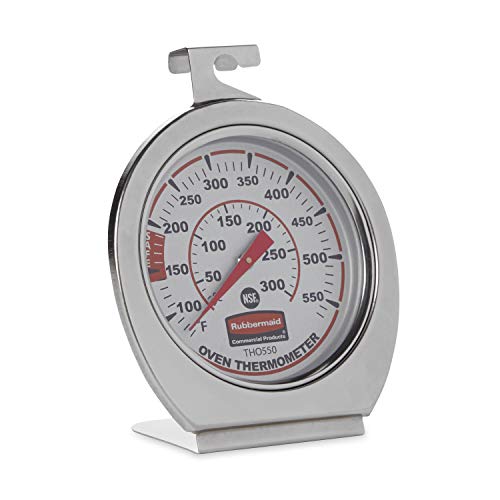
- ✓ Durable stainless build
- ✓ Battery-free operation
- ✓ Instant, accurate read
- ✕ No digital features
- ✕ Basic mounting options
| Oven Temperature Range | 60°F to 580°F (20°C to 300°C) |
| Construction Material | Stainless steel with shatter-proof lens |
| Type | Mechanical, battery-free thermometer |
| NSF Certification | NSF certified for food safety and kitchen environments |
| Installation Method | Can be mounted standing or hung |
| Usage Environments | Suitable for traditional ovens, toaster ovens, grills, and smokers |
You spot the thermometer hitching a ride on the oven rack and suddenly realize it’s not just a tool, it’s a tiny sous-chef you can trust. I dropped mine into a hot oven by accident and watched the glass survive a 580° bake without so much as a bead of fog forming on the lens.
The stainless steel body feels sturdy enough to survive a busy kitchen, and the shatter-proof lens is surprisingly clear even after a few scrapes from rack guides. It reads the temp instantly, no batteries needed, which is a breath of fresh air when you’re juggling timers and probes.
Setup is simple—hang it or stand it, and you’re good to go. It’s built to live in a professional-grade environment but fits just as well in a home kitchen with a toaster oven or grill.
The scale covers 60° to 580° F, which means you get a quick, reliable read for everything from bread proofing to broiling, without fiddling with cords or digital presets.
In use, you’ll notice a calm, mechanical precision. There’s no lag or clutter from wireless interference, just a clean dial that tells you exactly where you stand.
It’s ideal for monitoring meats, baked goods, and even slow-sweets that die a slow death if the oven runs hot.
One small surprise: the instrument sits nicely on a rack or slides into the oven door edge with minimal fuss. It feels like a piece that was meant to endure back-to-back service days, not a fragile gadget you’ll replace next season.
Do I wish any extra features? Maybe a tare or reference marks for common temperatures, but the simplicity is its charm.
For reliability and straightforward heat monitoring, this Rubbermaid thermometer is a solid, no-nonsense pick.
What Features Should You Look for in the Best Analog Grill Thermometer?
When searching for the best analog grill thermometer, consider the following features:
- Temperature Range: A good analog grill thermometer should have a wide temperature range, typically from around 100°F to 600°F. This range allows for accurate readings for various types of grilling and cooking methods, ensuring you can monitor temperatures for both low and high-heat grilling.
- Dial Size: The size of the dial is crucial for readability. A larger dial, preferably 2.5 to 3 inches in diameter, enables you to easily see the temperature at a glance, even from a distance, which is particularly useful when managing multiple cooking tasks simultaneously.
- Calibration: Look for a thermometer that is easy to calibrate to ensure accuracy over time. A thermometer with a calibration feature allows you to adjust the readings based on known temperatures, which is essential for maintaining precision in your cooking.
- Durability: The materials used in the construction of the thermometer matter significantly. Opt for models made from stainless steel or other corrosion-resistant materials that can withstand high temperatures and the outdoor elements, ensuring longevity and reliable performance.
- Mounting Options: Consider how the thermometer can be mounted on your grill. Some models come with a clip for easy attachment to grill grates, while others may have a stem that fits into a port or a dedicated hole, providing flexibility depending on your grill design.
- Readability: The clarity of the markings on the dial is important for quick readings. Look for thermometers with bold, easy-to-read temperature indicators and a color-coded scale, which can help you quickly identify when your food reaches the desired doneness.
- Response Time: The speed at which an analog thermometer provides a reading is essential for effective cooking. A good thermometer should give a reading within a few seconds, allowing you to make timely adjustments to your grilling technique.
How Do You Use an Analog Grill Thermometer Effectively?
Using an analog grill thermometer effectively ensures that your food is cooked to the perfect temperature.
- Calibrate the Thermometer: Ensure your analog grill thermometer is properly calibrated before use to guarantee accurate readings.
- Placement in Food: Insert the thermometer into the thickest part of the meat, avoiding bones or fat for the most reliable temperature measurement.
- Monitor Cooking Times: Regularly check the thermometer during cooking to track temperature changes and adjust heat levels as necessary.
- Understand Temperature Zones: Familiarize yourself with the ideal cooking temperatures for different types of meat to ensure safe and delicious results.
- Cleaning and Maintenance: After use, clean the thermometer thoroughly to maintain its accuracy and prolong its lifespan.
Calibrating your thermometer involves checking it against a boiling water or ice water test to ensure it reads accurately at known temperatures. Regular calibration helps prevent cooking mishaps caused by inaccurate readings.
When placing the thermometer in food, aim for the center of the meat, which provides the best indication of doneness. This method helps avoid misleading readings that can occur if the probe touches bone or fat, which can conduct heat differently.
Monitoring cooking times with your thermometer allows you to make real-time adjustments to your grill’s heat. This proactive approach helps you prevent overcooking or undercooking your food, ensuring optimal results every time.
Understanding temperature zones is crucial for grilling success; different meats have specific safe cooking temperatures. For example, poultry should reach an internal temperature of 165°F, while steaks can be enjoyed at varying degrees of doneness based on personal preference.
Cleaning your analog grill thermometer after each use is essential for maintaining hygiene and accuracy. Use warm, soapy water to clean the probe and avoid submerging the entire unit, as this can damage the internal mechanisms.
What Are the Common Benefits of Using an Analog Grill Thermometer?
The common benefits of using an analog grill thermometer include accuracy, ease of use, and durability.
- Accuracy: Analog grill thermometers provide reliable readings of the internal temperature of meats, ensuring that they are cooked to the desired doneness. This accuracy helps prevent undercooking or overcooking, which can affect both safety and flavor.
- Ease of Use: These thermometers typically feature a straightforward dial and clear markings, making them simple to read. Unlike digital thermometers, they do not require batteries or complicated setups, allowing for quick and hassle-free use while grilling.
- Durability: Built with robust materials, analog grill thermometers can withstand high temperatures and outdoor conditions, making them a long-lasting tool for grilling enthusiasts. Their lack of electronic components also means they are less prone to malfunction from heat or moisture exposure.
- Cost-Effectiveness: Generally, analog grill thermometers are more affordable compared to their digital counterparts. This budget-friendly aspect makes them an accessible option for both amateur and professional grillers looking for reliable temperature readings without breaking the bank.
- Instant Readings: These thermometers provide immediate temperature readings once inserted into the meat, allowing grillers to make quick decisions about cooking times. This immediate feedback can enhance the overall grilling experience by helping to achieve perfect results.
Why Is Calibration Important for Your Analog Grill Thermometer?
Calibration is a critical aspect of maintaining the accuracy of your analog grill thermometer. Over time, these thermometers can drift from their original settings, leading to incorrect temperature readings. Here are a few reasons why calibration is essential:
-
Precision in Cooking: Accurate temperature readings ensure your food is cooked to the right doneness, preventing undercooking or overcooking. For instance, grilling meats at the correct temperature is vital for both food safety and flavor.
-
Consistency: A calibrated thermometer allows for consistent cooking results. This is particularly important for repeat dishes where you want the same taste and texture every time.
-
Longevity: Regularly calibrating your thermometer can extend its lifespan. It minimizes wear and tear caused by incorrect readings that lead to overcompensation in cooking or damage to the grill.
To calibrate an analog grill thermometer, use the ice water method:
- Fill a glass with ice and add cold water, leaving some space at the top.
- Insert the thermometer into the ice water, ensuring it doesn’t touch the sides of the glass.
- Wait for the needle to stabilize; it should read 32°F (0°C).
- If it doesn’t, adjust the calibration screw or note the discrepancy for future reference.
Consistent calibration helps achieve perfect grilling results, enhancing your culinary endeavors.
What Mistakes Should You Avoid When Using an Analog Grill Thermometer?
When using an analog grill thermometer, there are several common mistakes to avoid for accurate cooking results:
- Not Calibrating the Thermometer: Failing to calibrate your analog thermometer can lead to inaccurate temperature readings, which can compromise your cooking. It’s essential to check the calibration regularly, especially if the thermometer has been exposed to extreme heat or cold.
- Incorrect Placement: Placing the thermometer in the wrong location can result in misleading temperatures. For optimal readings, the thermometer should be inserted into the thickest part of the meat without touching bone or fat, and it should be positioned in a way that allows it to measure the air temperature inside the grill.
- Ignoring the Temperature Range: Many analog thermometers have specific temperature ranges they are designed for, and exceeding these can cause damage. Always check the manufacturer’s specifications to ensure you’re operating within the safe temperature limits.
- Not Allowing Time to Stabilize: Many users make the mistake of reading the thermometer too quickly. After placing the thermometer in the grill or meat, give it a minute or two to stabilize and provide an accurate reading, as the dial may take time to respond to temperature changes.
- Overlooking Cleaning and Maintenance: Neglecting to clean your analog thermometer can lead to buildup that affects its accuracy. Regular cleaning after each use will help maintain its performance and prolong its lifespan, ensuring you get consistent readings every time.
How Do Customer Reviews Influence Your Choice of an Analog Grill Thermometer?
Positive feedback often includes mentions of specific features, such as quick temperature readings or ease of use, which can help users evaluate if the thermometer aligns with their grilling needs. These endorsements provide reassurance and can lead to increased confidence in the purchase decision.
On the flip side, negative feedback can reveal issues that potential buyers may not have considered, such as poor accuracy or a fragile design. Awareness of these drawbacks can lead customers to seek alternatives that guarantee better performance or reliability.
Comparative insights are valuable as they allow customers to see how a particular model stacks up against competitors. Users often share their experiences with different thermometers, highlighting pros and cons that can guide others in their purchasing journey.
Durability and build quality are critical factors, especially for outdoor grilling where thermometers are subjected to various weather conditions. Reviews that detail the robustness of the thermometer can indicate whether it is a worthy investment for frequent grilling enthusiasts.
Related Post: