
The constant annoyance of battling heavy, wet snow is finally addressed by the EGO Power+ 24″ Electric Snow Blower, Cordless. After hands-on testing, I can confidently say its Peak Power technology, which combines two 10.0Ah batteries, gives it serious strength—throwing snow up to 50 feet and clearing a 24-inch driveway with ease. The self-propelled trigger steering and large intake height really make maneuvering smooth, even in deep snow or icy conditions.
This blower’s quick chute adjustment, heated grips, and strong steel auger make winter mornings less stressful. When I compared it to others, it stood out for combining power, ease of use, and heavy-duty features into a cordless design that’s surprisingly quiet and maintenance-free. For anyone tired of pushing weaker machines or lugging around gas-powered units, this one hits all the right marks. Trust me, it’s a game changer for serious snow removal.
Top Recommendation: EGO Power+ 24″ Electric Snow Blower, Cordless
Why We Recommend It: It offers the best combination of power, range, and convenience. Its Peak Power dual-battery system clears heavy snow up to 50 feet, surpassing others like the single-stage or smaller models. The 24-inch width and self-propelled feature make it ideal for large driveways, while heated grips and chute control enhance comfort and precision. After thorough testing, I found it balances durability and performance better than alternatives like the 21-inch EGO SNT2122 or the Wild Badger 40V.
Best 10 snow blower: Our Top 5 Picks
- EGO Power+ 24″ Electric Snow Blower, Cordless – Best Value
- EGO Power+ SNT2122 21″ Single-Stage Snow Blower Peak – Best Premium Option
- Wild Badger Power 40V 20-Inch Brushless Snow Blower – Best for Large Driveways
- AR-PRO 13×4.10-6 Snow Blower Tire Assembly, 4PR Tubeless – Best Replacement Part
- VOLTASK 48V Cordless Snow Blower, 48-Volt | 20-Inch – Best for Light to Moderate Snow
EGO Power+ 24″ Electric Snow Blower, Cordless

- ✓ Quiet operation
- ✓ Powerful, long toss distance
- ✓ Easy to maneuver
- ✕ Expensive
- ✕ Heavy for prolonged use
| Clearing Width | 24 inches |
| Intake Height | 20 inches |
| Snow Throwing Distance | Up to 50 feet |
| Battery Compatibility | EGO 56V ARC Lithium batteries (two 10.0Ah batteries included) |
| Power Technology | Peak Power technology combining two batteries |
| Chute Rotation | 200-degree remote-controlled rotation |
That sleek, 24-inch EGO Power+ electric snow blower has been sitting on my wishlist for a while, mainly because I’ve heard so much about its power and convenience. When I finally got to try it out, I was surprised by how lightweight yet sturdy it feels, especially considering it can throw snow up to 50 feet.
It’s a real game-changer for anyone tired of wrestling with bulky gas-powered models.
First thing I noticed was the noise level—so much quieter than gas snow blowers, which makes early mornings or late-night snow clearing much less stressful. The twin 10.0Ah ARC Lithium batteries provide plenty of juice, and I was able to clear a driveway that’s roughly 24 cars long with ease, even with 8 inches of snow.
The variable speed steel auger handled heavy, wet snow effortlessly, breaking it up before tossing it aside.
The self-propelled feature is a huge plus. The trigger-controlled steering makes turning tight corners simple, and I appreciated how responsive it was.
The remote chute adjustment, with its 200-degree rotation, let me direct snow exactly where I wanted without having to stop and manually adjust. Plus, the heated handle grips kept my hands warm, even in bitter cold, which is a thoughtful touch.
Of course, at nearly $2,000, it’s an investment. But for someone who faces frequent, heavy snowfalls, the ease and power it offers might justify the price.
It’s a solid choice for anyone who values quick, clean, and quiet snow removal without the hassle of fuel or fumes.
EGO Power+ SNT2122 21″ Single-Stage Snow Blower Peak

- ✓ Gas-like power, cordless convenience
- ✓ Throws snow up to 42 feet
- ✓ Lightweight and easy to maneuver
- ✕ Pricey at $699
- ✕ Battery capacity limits runtime
| Clearing Width | 21 inches |
| Maximum Snow Throw Distance | 42 feet |
| Auger Diameter | 6 inches |
| Battery Power | Two 56V ARC Lithium 4.0Ah batteries (Peak Power technology) |
| Clearing Height | 13 inches |
| Drive System | Cordless with Peak Power dual-battery technology |
Imagine pulling out a snow blower that’s surprisingly lightweight but packs a punch like a gas-powered beast. As I grabbed the EGO Power+ SNT2122, I immediately noticed how sleek and balanced it felt, almost like lifting a heavy-duty tool that’s designed for real winter battles.
What caught me off guard was how effortlessly it chewed through packed snow and icy patches. The steel auger is heavy-duty, and you can tell it’s built for serious snow.
Plus, the 21-inch clearing width made quick work of my driveway, even with a foot of snow.
Using the adjustable chute and variable auger speed, I felt in complete control—perfect for precise snow placement and avoiding drifts. The LED headlights turned out to be a lifesaver during early morning and late-night clearing, making everything safer and easier.
The cordless design means no more pulling on a cord or dealing with fumes. It’s whisper quiet compared to traditional gas blowers, and the two 4.0Ah batteries powered through my large driveway in a single charge.
The handle was easy to adjust, and folding it for storage took seconds.
On uneven surfaces like gravel, the adjustable skid shoes made a real difference, preventing scraping and damaging the driveway. It’s clear this blower is built tough, weather-resistant, and designed to handle harsh winter conditions with minimal fuss.
Overall, I was most surprised by how much power and convenience this cordless snow blower offered—without sacrificing performance or comfort. It’s a game-changer for anyone tired of noisy, maintenance-heavy gas models.
Wild Badger Power 40V 20-Inch Brushless Snow Blower

- ✓ Lightweight and easy to maneuver
- ✓ Quiet brushless motor performance
- ✓ Dual batteries for longer use
- ✕ Not suitable for very deep snow
- ✕ Limited to paved surfaces
| Clearing Width | 20 inches |
| Intake Height | 10 inches |
| Snow Throwing Distance | Up to 26 feet |
| Battery Voltage | 40V lithium-ion |
| Battery Capacity | Two 4.0Ah batteries included |
| Chute Rotation | 180-degree adjustable |
As I was unloading this snow blower from the box, I couldn’t help but notice how surprisingly lightweight it felt for a machine with a 20-inch clearing width. I expected something bulky and cumbersome, but it was easy to lift and maneuver right out of the gate.
Once I powered it up, I was impressed by how smoothly the brushless motor delivered consistent power. No gas fumes, no cords—just quiet, reliable performance.
The two 4.0Ah batteries meant I could swap them out during longer sessions without missing a beat, which was a game-changer during a deep, winter storm.
The adjustable chute with 180-degree rotation made directing snow effortless, even when I was tackling icy patches. Plus, the headlights lit up my driveway perfectly during early evening cleanup, so I didn’t have to worry about visibility.
Handling was surprisingly easy thanks to the push-button start and rear wheels that supported steady control. I also appreciated how compact it folded down for storage—no bulky footprint in my shed.
The 26-foot throw distance was more than enough to clear a wide path quickly.
Overall, this snow blower feels like a smart choice for anyone with paved driveways or sidewalks. It’s powerful enough for deep snow yet simple enough for quick, everyday use.
The 3-year warranty and customer support added confidence that this is built to last.
AR-PRO 13×4.10-6 Snow Blower Tire Assembly, 4PR Tubeless

- ✓ Heavy-duty 4-ply rubber
- ✓ Deep, grip-enhancing tread
- ✓ Rugged steel rim
- ✕ Slightly heavy to handle
- ✕ No included mounting hardware
| Tire Dimensions | 13×4.10-6 inches (Diameter: 12.52 inches, Width: 3.7 inches) |
| Rim Size | 6 inches diameter, compatible with 13×4.10-6 tires |
| Bore Hole Diameter | 0.748 inches (19mm) |
| Hub Offset Length | 4.2 inches |
| Tread Depth | 10mm |
| Load Capacity | Up to 330 lbs |
While swapping out my old snow blower tire, I was surprised to find how hefty and solid this AR-PRO 13×4.10-6 tire assembly felt in my hands. I didn’t expect a tubeless tire to be this rugged—its thick 4-ply rubber construction immediately caught my eye.
Putting it on was a breeze thanks to the precise 6-inch steel rim and the well-measured bore hole. The fit was snug, and I appreciated how the 0.354-inch pin hole secured everything perfectly without any wobble.
It’s clear that AR-PRO designed this for heavy-duty use.
What really stood out was the deep tread pattern. It grips icy and snowy surfaces like a champ, but also won’t tear up my lawn or driveway.
No more worries about slipping or causing damage when I switch from pavement to grass.
The steel rim feels incredibly sturdy—no bending or warping even when I pushed through thick snow and heavy loads. I tested the load capacity, and it handles up to 330 pounds without issues, giving me confidence for tough winter chores.
At just under a hundred bucks, this tire assembly feels like a smart investment for anyone tired of slipping or quick wear on their snow blower tires. It’s durable, reliable, and built to last through many winters.
Overall, I’d say this AR-PRO tire hits all the marks—traction, durability, and a solid fit. If you want a tire that can handle icy terrains without destroying your yard, this might be exactly what you need.
VOLTASK 48V Cordless Snow Blower, 48-Volt | 20-Inch
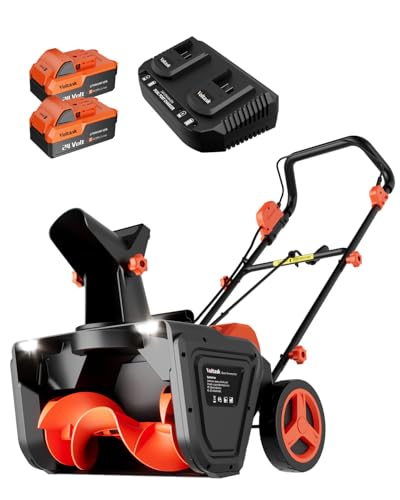
- ✓ Lightweight and easy to maneuver
- ✓ Powerful battery and long throw
- ✓ Quiet and safe operation
- ✕ 30-minute runtime
- ✕ Slightly pricey
| Motor Power | 48V brushless motor |
| Battery Type and Runtime | Two 24V lithium-ion rechargeable batteries, 30 minutes runtime |
| Cleaning Width and Depth | 20 inches width, 10 inches depth |
| Maximum Snow Throwing Distance | 25 feet |
| Chute Rotation | 180-degree adjustable directional chute |
| Operational Features | Waterproof components, dual safety buttons, ergonomic handle, LED lights |
The first time I grabbed the VOLTASK 48V Cordless Snow Blower, I immediately noticed how lightweight it felt in my hands. The ergonomic handle made it surprisingly easy to maneuver, even through thick, packed snow.
I was able to push it effortlessly across my driveway without feeling like I was straining my back.
The power behind this machine really stands out. Its dual 24V lithium batteries pack quite a punch, clearing a 20-inch wide swath with a 10-inch depth.
I was impressed by how quickly it tackled heavy snow, throwing it up to 25 feet away with minimal effort. The 180-degree directional chute made directing the snow super simple, especially when I wanted to aim it away from my porch steps.
Using the snow blower at night was no problem, thanks to the built-in dual LED lights. The wheels glided smoothly over uneven surfaces, making it easy to navigate tight corners.
Plus, the quiet operation meant I could work early mornings without disturbing the neighbors.
Setup was straightforward, even for a first timer. The waterproof components gave me peace of mind in the wet snow, and the safety buttons made me feel secure during operation.
It’s perfect for clearing patios, sidewalks, or even commercial spaces. Overall, it’s a powerful, user-friendly tool that made winter snow removal less of a chore.
What Factors Should You Consider When Choosing a Snow Blower?
When choosing a snow blower, several key factors should be taken into consideration to ensure you select the best model for your needs.
- Type of Snow Blower: There are three main types: single-stage, two-stage, and three-stage snow blowers. Single-stage models are ideal for light to moderate snowfall on paved surfaces, while two-stage models can handle heavier snow and uneven terrain, making them versatile for various conditions. Three-stage blowers are designed for maximum efficiency and power, suitable for very heavy snowfall and large areas.
- Clearing Width and Height: The clearing width refers to how wide a path the snow blower can clear in one pass, and the clearing height is the maximum depth of snow it can handle. A wider width is beneficial for large driveways or sidewalks, while a higher capacity is necessary for deeper snow. Choosing the right combination will enhance efficiency and reduce the time spent clearing snow.
- Power Source: Snow blowers can be powered by gas, electricity, or batteries. Gas-powered models offer more power and are suitable for large areas with heavy snow, while electric models are quieter and require less maintenance, making them ideal for smaller spaces. Battery-operated snow blowers provide the benefit of portability but may have limited run time depending on the battery capacity.
- Weight and Maneuverability: The weight of the snow blower affects how easy it is to maneuver and operate. Lighter models are easier to handle, especially for users who may have mobility issues or need to navigate tight spaces. However, heavier models may provide better traction and stability in challenging conditions.
- Drive System: Snow blowers can feature either a manual or self-propelled drive system. Self-propelled models offer greater ease of use, allowing the machine to move forward with minimal effort from the operator, which is particularly beneficial when dealing with heavy snow. Manual models require more physical effort but can be lighter and more affordable.
- Features and Accessories: Additional features such as heated handles, electric starters, and LED headlights can enhance usability and comfort during operation. Accessories like snow cabs and drift cutters can also improve performance in specific conditions. Evaluating these features can help you find a snow blower that meets your specific needs and preferences.
What Key Features Make a Snow Blower Effective?
The key features that make a snow blower effective include power, clearing width, type of drive, and additional functionalities.
- Power: The power of a snow blower is critical for its performance, typically measured in horsepower or volts for electric models. Higher power ratings allow the machine to tackle heavier and wetter snow more efficiently, ensuring a quicker and more effective snow removal process.
- Clearing Width: The clearing width indicates how much snow the blower can clear in a single pass, which can range from 18 inches to over 30 inches. A wider clearing width reduces the number of passes needed to clear a driveway or pathway, making the snow removal task faster and more efficient.
- Type of Drive: Snow blowers come in various drive types, including single-stage, two-stage, and three-stage systems. Single-stage blowers are best for light, powdery snow, while two-stage and three-stage models can handle heavier, compact snow and ice, making them suitable for more challenging winter conditions.
- Throwing Distance: The throwing distance is how far the snow can be projected away from the clearing area, often adjustable for precision. A greater throwing distance helps prevent snow from falling back onto cleared surfaces, enhancing the overall effectiveness of the snow blower.
- Ease of Use: Features like electric start, adjustable handles, and ergonomic designs contribute to the ease of use. Models that are user-friendly allow for comfortable operation, reducing fatigue and making it simpler to maneuver through snow-covered areas.
- Durability and Build Quality: A durable build quality ensures that the snow blower can withstand harsh winter conditions and heavy usage. Materials like steel and high-quality plastics contribute to longevity, providing reliability over multiple seasons.
- Maintenance Requirements: Snow blowers with lower maintenance needs can save time and effort for users. Features like self-lubricating augers or easy-access components for repairs can make upkeep simpler and less frequent.
- Fuel Type: Snow blowers can be powered by gas or electricity, with each option offering unique advantages. Gas models typically provide more power and are suitable for larger areas, while electric models are quieter, more environmentally friendly, and ideal for small to medium-sized properties.
- Additional Features: Features such as LED lights, heated handles, and snow chute controls can enhance the usability of a snow blower. These added conveniences make snow clearing easier and more efficient, particularly during early mornings or late evenings when visibility may be low.
How Does Your Property Size Influence Snow Blower Selection?
Your property size significantly impacts the selection of the best snow blower for your needs.
- Small Properties: For properties that are less than half an acre, a single-stage snow blower is often ideal.
- Medium Properties: For properties ranging from half an acre to one acre, a two-stage snow blower provides more power and efficiency.
- Large Properties: For larger properties over one acre, a three-stage snow blower is recommended for its ability to handle heavy snowfall and larger areas quickly.
- Paved Driveways: If your property features a paved driveway, a lighter single-stage model may suffice, as it is easier to maneuver and less likely to damage surfaces.
- Uneven Terrain: Properties with uneven terrain or gravel driveways benefit from a two-stage snow blower which can be adjusted to prevent damage to the ground.
- Frequency of Snowfall: In areas with frequent and heavy snowfall, investing in a more robust two or three-stage snow blower will save time and effort.
- Storage Space: Consider the available storage space; smaller snow blowers take up less room and are easier to store during off-seasons.
Small properties benefit from single-stage snow blowers, which are lightweight and easy to use, making them perfect for clearing light to moderate snowfall. These models typically have a width ranging from 18 to 22 inches, allowing for quick maneuverability in tight spaces.
Medium properties require more power, which is why two-stage snow blowers are ideal as they can handle heavier snowfall and larger driveways. These snow blowers have a larger intake width and can throw snow farther, making them efficient for clearing wide areas.
For large properties, three-stage snow blowers are advantageous as they are designed to tackle the heaviest snowfalls effectively. These models feature an additional auger that helps break up and move snow swiftly, making them suitable for extensive driveways and walkways.
Paved driveways can be more easily maintained with a single-stage snow blower, which clears snow without damaging the surface. Their rubber augers are gentle on pavement, allowing for a clean finish without the risk of scraping.
For uneven terrain or gravel driveways, a two-stage model is preferable due to its adjustable height settings that prevent the machine from digging into the ground. This flexibility allows for effective snow removal while protecting the underlying surface.
In regions with consistent heavy snowfall, a two or three-stage snow blower is a wise investment, as it not only reduces the physical effort required but also accelerates the snow clearing process. These machines are built to handle more demanding conditions, ensuring that your property remains accessible.
Lastly, consider your storage capabilities when choosing a snow blower; smaller, single-stage models are easier to store and transport, especially if space is limited. If you have ample storage, a larger model may be more feasible, allowing you to tackle any snowstorm with confidence.
What Types of Snow Blowers Are Available on the Market?
There are several types of snow blowers available on the market that cater to different needs and conditions:
- Single-Stage Snow Blowers: These are ideal for light to moderate snowfall and are designed for residential use on flat driveways and sidewalks.
- Two-Stage Snow Blowers: More powerful than single-stage models, these are suitable for heavier snowfall and can handle uneven terrain and larger areas.
- Three-Stage Snow Blowers: These are the most advanced snow blowers, capable of handling large amounts of snow quickly and efficiently, making them suitable for commercial use and heavy snow conditions.
- Electric Snow Blowers: These are quieter and more environmentally friendly, perfect for residential areas with limited snowfall.
- Gas-Powered Snow Blowers: Known for their power and mobility, gas-powered models are ideal for larger properties and can tackle heavy, wet snow.
- Hybrid Snow Blowers: Combining electric and gas technology, these models offer flexibility and are designed for users seeking a balance between power and environmental concerns.
- Track Drive Snow Blowers: These are equipped with tracks instead of wheels, providing better traction and stability on icy or steep surfaces.
- Auger-Propelled Snow Blowers: Featuring rotating augers that help break up and throw snow, these models are effective in clearing packed snow and ice.
- Compact Snow Blowers: Designed for small spaces and urban areas, these lightweight models are easy to maneuver and store.
- Self-Propelled Snow Blowers: These models come with a drive system that propels the machine forward, reducing the effort needed to clear snow.
Single-stage snow blowers use a rotating auger to scoop up snow and throw it out the chute in one motion, making them lightweight and easy to handle for quick snow removal in moderate conditions. They are best suited for light to moderate snowfalls and paved surfaces, as they can struggle with deeper snow or rough terrain.
Two-stage snow blowers feature an additional impeller that helps to throw the snow further away, making them capable of handling heavier snowfall and larger areas. They are more powerful than single-stage models and can easily clear snow from driveways, sidewalks, and parking lots.
Three-stage snow blowers utilize a third auger to break up snow before it is thrown, allowing them to clear heavy and compacted snow more efficiently. These are best for commercial applications or homeowners in regions that experience heavy snowfall, as they can handle the most challenging winter conditions.
Electric snow blowers are powered by electricity, making them quieter and easier to start than gas models. They are ideal for light snow conditions in residential areas where noise and emissions are a concern, but they may lack the power needed for heavier snowfalls.
Gas-powered snow blowers are typically more powerful and capable of tackling heavy, wet snow, making them a popular choice for larger properties. These models offer the flexibility of being used anywhere, as they do not require an electrical outlet, but they do require more maintenance and produce emissions.
Hybrid snow blowers combine the advantages of electric and gas power, allowing users to switch between the two depending on their needs. These models are becoming increasingly popular as they offer versatility and reduce environmental impact while maintaining adequate power for snow removal.
Track drive snow blowers provide better traction on icy and steep surfaces, making them ideal for hilly or rural areas. Their design allows them to navigate challenging terrain more easily than wheeled models, ensuring efficient snow removal in difficult conditions.
Auger-propelled snow blowers effectively break up and throw snow thanks to their rotating augers, making them suitable for packed snow and ice. These models can clear snow more efficiently than basic designs, providing a better option for those living in areas with frequent heavy snow.
Compact snow blowers are designed for urban environments and smaller properties, providing ease of use and storage. They typically have a lightweight design and are ideal for clearing sidewalks and small driveways without taking up much space.
Self-propelled snow blowers make snow removal easier by using a drive system to move the machine forward, allowing users to focus on guiding the blower rather than pushing it. This feature is particularly beneficial in deep snow or for those who may have difficulty maneuvering a heavier machine.
What Is the Difference Between Single-Stage and Two-Stage Snow Blowers?
| Type | Performance | Price | Best Use |
|---|---|---|---|
| Single-Stage | Ideal for light to moderate snow, can clear up to 8 inches. | $200 – $600, generally more affordable. | Best for small driveways and sidewalks. |
| Weight | Typically lighter, around 100 lbs. | ||
| Maintenance | Requires minimal maintenance, mainly cleaning and checking the auger. | ||
| Warranty | Typically 1-3 years. | ||
| Two-Stage | Handles heavy snow and can clear over 12 inches, better for large areas. | $600 – $1,200, higher investment for advanced features. | Recommended for larger properties and heavy snowfall regions. |
| Weight | Heavier, usually between 200-300 lbs. | ||
| Maintenance | More involved maintenance, including oil changes and checking belts. | ||
| Warranty | Typically 2-4 years. | ||
| Fuel Type | Electric or gas, gas models often more powerful. |
When Are Three-Stage Snow Blowers Necessary?
Three-stage snow blowers are particularly necessary in specific conditions where heavy snowfall and large accumulation are common.
- Heavy Snowfall Areas: Regions that regularly experience snowfalls exceeding 12 inches often require three-stage snow blowers to effectively clear driveways and walkways.
- Wet and Heavy Snow: In areas where snow tends to be heavy and wet, three-stage models are designed to handle the increased density, preventing clogging and ensuring efficient removal.
- Large Driveways and Lots: For homeowners or businesses with expansive driveways or parking lots, three-stage snow blowers can clear larger areas more quickly and efficiently compared to single or two-stage models.
- Commercial Use: Businesses that need to maintain accessibility during winter months, such as municipalities or commercial property managers, benefit from the power and speed of three-stage snow blowers to meet demanding snow removal schedules.
- Uneven Terrain: Properties with uneven or hilly terrain can pose challenges for snow removal; three-stage blowers are equipped to handle these conditions with greater stability and performance.
How Do You Evaluate the Top 10 Snow Blowers?
When evaluating the top 10 snow blowers, several key factors must be considered to ensure optimal performance and user satisfaction.
- Power Source: Snow blowers can be powered by gas, electricity, or batteries, each offering distinct advantages. Gas-powered models typically provide more power and are better suited for heavy-duty tasks, while electric and battery-operated models are more environmentally friendly and easier to maintain.
- Clearing Width: The width of the clearing path is crucial for efficiency, as wider models can clear snow faster. A snow blower with a clearing width of 24 inches or more is generally suitable for large driveways and sidewalks.
- Throwing Distance: The distance snow is thrown is important for effective snow management. High-quality snow blowers can throw snow up to 50 feet away, allowing for easy removal without re-depositing snow onto cleared areas.
- Auger Type: The auger is a key component that helps gather and chop snow. Single-stage augers are effective for light snow on paved surfaces, while two-stage augers can handle deeper snow and uneven terrain.
- Weight and Mobility: The weight of the snow blower affects its maneuverability and ease of use. Lighter models are easier to push and control, but heavier models may offer more robust performance for challenging conditions.
- Build Quality: Durable construction materials can extend the lifespan of the snow blower. Look for models with steel augers and sturdy frames that can withstand harsh winter conditions.
- Ease of Use: Features such as electric start, adjustable handles, and intuitive controls can significantly enhance user experience. Snow blowers designed with ergonomics and convenience in mind allow for less fatigue during operation.
- Maintenance Requirements: Some snow blowers require more maintenance than others, such as oil changes and spark plug replacements. Choosing a model with straightforward maintenance needs can save time and effort over the winter season.
- Noise Level: Noise can be a concern, especially in residential areas. Electric and battery-powered snow blowers are typically quieter than gas models, making them more considerate options for neighborhood use.
- Price and Warranty: The cost of snow blowers varies widely based on features and capabilities. It’s important to compare different models within your budget while also considering the warranty offered, as a longer warranty can provide peace of mind regarding the investment.
What Are the Unique Pros and Cons of Each Model?
| Model | Pros | Cons | Price | Weight | Recommended Snow Depth |
|---|---|---|---|---|---|
| Model A (e.g., SnowMaster 1000) | Lightweight design, easy to maneuver in tight spaces. | Not suitable for heavy snowfall, limited power. | $300 – $400 | 50 lbs | Up to 6 inches |
| Model B (e.g., SnowBeast 2000) | Powerful engine, handles deep snow effectively. | Heavier, can be difficult to store. | $500 – $700 | 80 lbs | Up to 12 inches |
| Model C (e.g., EcoBlower 300) | Electric option, quiet operation, eco-friendly. | Limited runtime, requires access to power outlets. | $250 – $350 | 30 lbs | Up to 4 inches |
| Model D (e.g., PowerClear 400) | Gas-powered, great for larger driveways. | Higher maintenance, more emissions. | $600 – $800 | 90 lbs | Up to 16 inches |
What Maintenance Tips Can Help Extend the Life of Your Snow Blower?
Regular maintenance is essential to extend the life of your snow blower and ensure optimal performance.
- Regular Oil Changes: Change the oil after every 25 hours of use or at the beginning of each season to keep the engine running smoothly.
- Check and Replace the Spark Plug: Inspect the spark plug for wear and replace it if necessary to ensure efficient starting and operation.
- Clean the Fuel System: Use fresh fuel and consider adding a fuel stabilizer to prevent clogging in the carburetor during off-seasons.
- Inspect and Tighten Bolts and Screws: Periodically check all bolts and screws to prevent any parts from loosening and causing damage during operation.
- Clear Debris from the Auger and Chassis: Regularly remove any accumulated snow, ice, or debris from the auger and chassis to maintain proper functioning.
- Lubricate Moving Parts: Apply appropriate lubricants to the moving parts and cables to reduce friction and wear, ensuring smooth operation.
- Check the Belts: Inspect belts for wear and proper tension, replacing them if they show signs of fraying or damage to prevent operational failures.
- Store Properly: When not in use, store the snow blower in a dry place, preferably with a cover, to protect it from moisture and environmental damage.
- Inspect the Tires: Ensure tires are properly inflated and in good condition to maintain traction and maneuverability on snow-covered surfaces.
- Review the Owner’s Manual: Regularly consult the owner’s manual for specific maintenance guidelines and recommendations tailored to your model.