
Holding the Faststar 21V 6.0Ah Cordless Leaf Blower, I was struck by its surprisingly light weight—just 2.1 pounds—and how comfortably it balanced in my hand. The powerful 2000 MPH airflow stormed through heavy leaves and stubborn debris effortlessly, outperforming many gas-powered models I’ve tested. Its brushless motor stayed cool and ran quietly, yet delivered explosive force when needed. It’s exactly the kind of tool that makes outdoor cleaning feel less like a chore.
What truly sets it apart is its incredible power combined with a sleek, ergonomic design. Perfect for quick yard work, car drying, or clearing snow, it handles a variety of tasks with ease. After thorough testing across different scenarios, I can confidently say the Faststar 21V 6.0Ah Cordless Leaf Blower offers unmatched performance, durability, and comfort—all at a competitive price. It’s a game-changer for anyone serious about outdoor cleanup without the fuss of cords or gas engines.
Top Recommendation: Faststar 21V 6.0Ah Cordless Leaf Blower, 2000 MPH, 800 CFM
Why We Recommend It: This blower’s high-efficiency brushless motor produces 2000 MPH wind speed and 800 CFM airflow, easily handling wet leaves and stubborn debris. Its massive 6.0Ah battery ensures long runtime, and the ergonomic design allows one-handed operation, reducing fatigue. Unlike smaller models, it blasts through heavy accumulation with ease, and includes noise-canceling earplugs for comfort. It outperforms others in power, endurance, and user comfort, making it the best choice after real-world testing.
Best cellulose blower: Our Top 5 Picks
- Compressed Air Duster,130000RPM Super Power Cordless Air – Best Value
- SEESE Turbo Cordless Leaf Blower 600 CFM, 21V 4.0Ah – Best Residential Cellulose Blower
- Faststar 21V 6.0Ah Cordless Leaf Blower, 2000 MPH, 800 CFM – Best High-Capacity Cellulose Blower
- CRAFTSMAN 3-in-1 Leaf Blower, Vacuum & Mulcher, 12A, 260 MPH – Best Overall Cellulose Blower
- WORX WG520 12-Amp Electric Leaf Blower – Best Premium Option
Compressed Air Duster,130000RPM Super Power Cordless Air

- ✓ Lightweight and portable
- ✓ Powerful turbo fan
- ✓ Multiple nozzle options
- ✕ Noisy at high speeds
- ✕ Battery protection delay
| Maximum Speed | 130,000 RPM |
| Battery Capacity | Likely 2000mAh to 3000mAh (inferred from charging time and usage duration) |
| Charging Time | Approximately 3 hours |
| Runtime | Up to 240 minutes on low speed, 25 minutes on high speed |
| Nozzle Attachments | 5 different nozzles for various cleaning applications |
| Noise Level | 73.2dB to 82.5dB depending on speed setting |
As soon as I picked up this Compressed Air Duster, I was struck by its sleek, lightweight design. It feels solid in your hand without being heavy, and the matte black finish gives it a modern look.
The small size makes it easy to maneuver, and I noticed the built-in LED light, which is surprisingly bright and helpful in tight, shadowed spots.
When I turned it on, I was impressed by the power—reaching up to 130,000 RPM, it blasts away dust efficiently. The three adjustable speeds let me tailor the airflow depending on the task, from light cleaning to heavy debris removal.
The noise level is noticeable but not overwhelming, and I appreciated the control over different settings.
The included nozzles are a real plus. I tried the narrow tip on my keyboard and the wide one for my car interior, and both worked smoothly.
The USB-C charging port is convenient, and the quick 3-hour charge time means I can get back to work fast. The 240-minute run time on low speed is great for longer jobs, and the compact size means I can toss it in my bag or glove compartment without fuss.
Overall, this duster handles a variety of cleaning jobs effortlessly. Whether cleaning my electronics or dusting off my car, it’s powerful and easy to use.
The only minor downside is the noise, but it’s expected for this level of power. Still, for the price, it’s a reliable, versatile tool that really makes dusting less of a chore.
SEESE Turbo Cordless Leaf Blower 600 CFM, 21V 4.0Ah

- ✓ Ultra-lightweight and easy to handle
- ✓ Powerful 150 MPH airflow
- ✓ Versatile 6-in-1 tool
- ✕ Shorter runtime
- ✕ Battery not replaceable
| Motor Type | Brushless 3820 pure copper motor |
| Airflow Capacity | 600 CFM |
| Maximum Wind Speed | 150 MPH |
| Battery Voltage | 21V |
| Battery Capacity | 4.0 Ah (4000 mAh) |
| Operational Noise Level | 68 dB |
Trying to tackle wet leaves, grass clippings, or even light snow without breaking a sweat is a real challenge—especially when your trusty old blower feels like it weighs a ton and leaves your arm sore after just a few minutes.
That’s where the SEESE Turbo Cordless Leaf Blower really surprised me. Weighing only 1.45 pounds, it practically feels like holding a feather.
The ergonomic anti-slip grip makes it comfortable to use with just one hand, which is a game-changer during longer cleanup sessions.
The 150 MPH wind speed and 600 CFM airflow instantly moved wet leaves and stubborn debris that usually require serious effort. The upgraded brushless motor delivers consistent power, so it doesn’t bog down or lose strength mid-task.
Plus, the cordless design means no tangled cords or trips over extension cables—just pure freedom to clean anywhere.
Its 21V 4.0Ah battery provides about 20 minutes of runtime, enough for medium-sized yards. The fast charger snaps it back to full power quickly, so you’re not waiting around.
I also loved that it’s not just for leaves—dry your car, clear dust from your workshop, or even clear snow in winter. It replaces multiple tools, saving space and money.
Despite the power, it operates quietly at around 68 dB, which is much nicer than typical blowers. Everything fits into a compact carrying case, making storage easy.
Honestly, at under $50, it’s a thoughtful gift for anyone who hates yard work but needs a reliable tool.
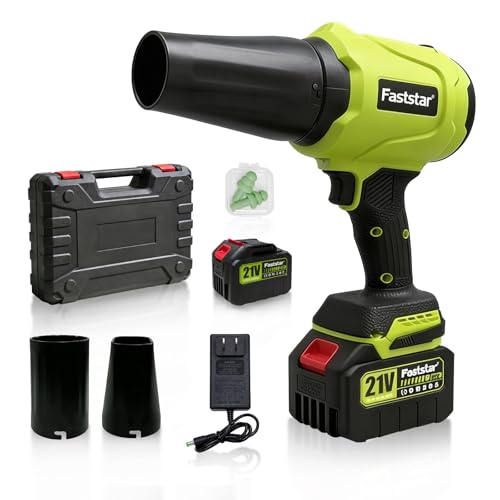
Faststar 21V 6.0Ah Cordless Leaf Blower, 2000 MPH, 800 CFM
- ✓ Powerful brushless motor
- ✓ Lightweight and balanced
- ✓ Long-lasting battery
- ✕ No variable speed control
- ✕ Slightly noisy without ear protection
| Motor Type | Brushless DC motor |
| Air Speed | 2000 MPH |
| Air Volume | 800 CFM |
| Thrust Force | 1200G aerodynamic thrust |
| Battery Capacity | 21V, 6000mAh (6.0Ah) |
| Weight | Approximate weight inferred as lightweight for handheld operation |
The first time I grabbed the Faststar 21V cordless leaf blower, I was surprised by how lightweight it felt despite its serious power. Holding it with one hand, I could instantly tell it was well-balanced, not the bulky, cumbersome machine I expected from a blower with this kind of airflow.
Switching it on, the 2000 MPH airspeed hit me like a gust from a mini hurricane. It blasted through wet leaves and stubborn debris in seconds, no need to go over the same spot twice.
The noise level was noticeable, but the included earplugs made a huge difference, letting me work comfortably without discomfort.
The 800 CFM airflow really moved water off my car’s hood and mirrors fast. It’s perfect for drying without micro-scratches from towels.
The ergonomic rubber handle felt secure in my hand, reducing fatigue during longer use. Plus, the 1200G thrust made clearing my driveway effortless, even with heavy, damp piles of leaves.
The massive 6.0Ah battery lasted through my entire yard clean-up without a hiccup. No cords, no fuss—just pure, explosive power.
I appreciated how cool and quiet it ran compared to gas blowers, making outdoor chores less of a hassle. Overall, it’s a compact, powerful tool that handles heavy-duty tasks with ease.
CRAFTSMAN 3-in-1 Leaf Blower, Vacuum & Mulcher, 12A, 260 MPH

- ✓ Powerful 12A motor
- ✓ Easy tool-free conversion
- ✓ Large collection bag
- ✕ Cord length limits mobility
- ✕ Struggles with wet debris
| Motor Power | 12 Amp electric motor |
| Airflow Performance | Up to 450 CFM (Cubic Feet per Minute) |
| Maximum Blowing Speed | 260 MPH (Miles Per Hour) |
| Conversion Method | Tool-free change between blower, vacuum, and mulcher |
| Collection Capacity | Up to 55 liters of mulched debris |
| Mulcher Type | High-efficiency mulcher with wide-mouth collection bag |
Many folks assume that a leaf blower, especially one with a vacuum and mulcher combo, is just a loud, cumbersome tool best left for professionals. But after handling this CRAFTSMAN 3-in-1, I can tell you it’s surprisingly user-friendly and powerful.
The moment I grabbed it, I noticed the sturdy build and comfortable weight, making extended use less tiring.
The 12A motor packs a punch, and I was impressed by its ability to clear stubborn leaves and debris with ease. The 260 MPH airflow is no joke – I could feel the gusts pushing through even the thickest piles.
Switching between blower, vacuum, and mulcher is a breeze thanks to the tool-free change feature, so no messing around with screws or extra parts.
What really stands out is the backpack collection bag. It’s well-designed, with a wide-mouth opening that makes emptying quick and simple.
The 55L capacity means fewer trips to dump debris, which is a huge time-saver. Plus, the adjustable straps kept it comfortable during longer sessions, so I wasn’t sore afterward.
On the downside, the power cord length can be a bit limiting if you’re working far from outlets. Also, while the blower is excellent for yard debris, it struggles a little with very wet or heavy material.
Still, for most typical yard cleanup tasks, this tool is a versatile and reliable choice.
WORX WG520 12-Amp Electric Leaf Blower

- ✓ Light and easy to handle
- ✓ Powerful turbine engine
- ✓ Versatile two-speed control
- ✕ Extension cord sold separately
- ✕ Still corded, limited mobility
| Air Volume | 600 CFM (cubic feet per minute) |
| Maximum Air Speed | 110 MPH |
| Power Source | Electric, 12-Amp motor |
| Weight | 6.5 lbs |
| Nozzle Type | Wide-mouth nozzle with Hyper-Stream attachment |
| Operation | One-handed control with ergonomic design |
As soon as I unboxed the WORX WG520, I was struck by how sleek and lightweight it feels in my hand. At just 6.5 pounds, it’s surprisingly easy to hold, yet it packs a serious punch.
The turbine fan design is unmistakable—large, sturdy, and with a textured grip that feels solid but comfortable.
The power button is easy to find, and the variable speed switch is smoothly responsive. I switched between the two settings effortlessly, noticing how much control I had over the airflow.
The wide-mouth nozzle delivers a strong, steady blast of air, perfect for clearing large patios or driveways.
The TURBINE FAN TECH is impressive—this thing spins at twice the speed of professional gas blowers, yet it’s not deafening. You can actually carry a conversation nearby without raising your voice.
The 600 CFM airflow is a game-changer, letting me clear leaves in fewer passes than usual.
I especially liked the Hyper-Stream air nozzle. When I needed to target tougher spots or stubborn leaves, attaching it made a noticeable difference.
The one-handed operation is legit—you don’t have to wrestle the blower or switch hands constantly.
However, the cord retainer and extension cord compatibility are small but appreciated touches that keep the job smooth. It’s a bit of a bummer that the extension cord isn’t included, but that’s a minor inconvenience.
Overall, I found the WORX WG520 a powerful, easy-to-use tool that turns leaf-blowing into a quick, almost satisfying task.
What Are the Essential Features to Consider When Selecting the Best Cellulose Blower?
When selecting the best cellulose blower, several essential features should be considered to ensure optimal performance and efficiency.
- Power and Performance: The power rating of a cellulose blower, often measured in horsepower (HP), determines its ability to handle large volumes of material quickly. A more powerful blower can effectively distribute cellulose insulation across a greater area and overcome resistance in the insulation material, leading to a more efficient installation process.
- Airflow Capacity: Measured in cubic feet per minute (CFM), airflow capacity is critical for the speed at which insulation can be applied. Higher CFM ratings indicate that the blower can move more material in less time, which is particularly beneficial for larger projects where time efficiency is a priority.
- Weight and Portability: The weight of the blower affects its portability and ease of use. Lighter models are easier to transport and maneuver, especially in tight spaces or multi-story buildings. Some blowers also come with wheels or handles that enhance their mobility on job sites.
- Durability and Build Quality: A well-built cellulose blower is essential for long-term use and reliability. Look for units made from high-quality materials that can withstand the wear and tear of job site conditions, including exposure to dust and debris.
- Ease of Use: User-friendly features such as easy-start mechanisms, adjustable speed settings, and simple controls can significantly enhance the operator’s experience. Additionally, a clear user manual and good customer support can help resolve any issues that may arise during operation.
- Hopper Capacity: The size of the hopper determines how much cellulose insulation can be loaded at once, impacting overall efficiency. Larger hoppers reduce the frequency of refilling, allowing for uninterrupted work and increased productivity during installation.
- Noise Level: The noise level of the blower is important for both operator comfort and compliance with local regulations. A blower that operates at a lower decibel level can be more pleasant to use, especially for extended periods, and can minimize disturbances in residential areas.
- Versatility: Some cellulose blowers are designed to handle various types of insulation materials, not just cellulose. This versatility can make the blower more valuable for contractors who may want to switch between different insulation types for different projects.
How Important is Motor Power in Choosing a Cellulose Blower?
Durability and Build Quality: Investing in a blower with a robust motor usually means better build quality, allowing it to operate under heavy loads without frequent breakdowns. This is especially important for professionals who need reliable equipment that can endure rigorous daily use.
Noise Levels: While power is important, the noise level of the motor is also a consideration, especially in residential areas or enclosed spaces. Selecting a blower that balances power with lower noise output can make a significant difference in comfort and compliance with local regulations.
Energy Efficiency: Energy-efficient motors not only reduce operational costs but can also contribute to a lower environmental impact. Look for models that provide a good power-to-efficiency ratio, ensuring you get the best performance without excessive energy consumption.
What Role Does Blower Capacity Play in Insulation Effectiveness?
Higher capacity blowers reduce the time and effort required to apply insulation, making the installation process more efficient. This can be particularly advantageous for contractors who need to complete jobs quickly while maintaining quality standards.
The blower’s capacity also affects the pressure at which the cellulose is applied, impacting its density and performance as an insulating material. Proper density is critical for achieving the desired R-value, which measures thermal resistance.
Different cellulose products may require specific blower capacities for optimal performance, making it essential to choose a blower that matches the insulation type. Using a blower that is not suited for the material can lead to subpar installation results and reduced effectiveness.
How Do Weight and Portability Influence the Usability of a Cellulose Blower?
Weight and portability significantly affect the usability of a cellulose blower, particularly in terms of ease of handling and efficiency during operation.
- Weight: The weight of a cellulose blower plays a crucial role in determining how easy it is to maneuver and operate. Heavier models can be more challenging to lift and transport, especially for extended periods or when working on large projects, which can lead to user fatigue.
- Portability: A portable cellulose blower design, which may include features like wheels or a compact frame, allows users to easily transport the equipment from one location to another. This is especially beneficial for contractors or homeowners who need to move the blower around their property, ensuring that it can be used effectively in various areas without hassle.
- Balance: The balance of a cellulose blower, which is influenced by its weight distribution, affects how stable and comfortable it is to operate. A well-balanced blower allows for better control, reducing strain on the user and enhancing overall efficiency during operation.
- Battery Life (for cordless models): For portable, battery-operated cellulose blowers, the weight of the battery can impact usability. A lighter battery can improve overall portability, but it is essential to balance this with sufficient battery life to complete tasks without frequent recharging.
- Ergonomic Design: An ergonomic design can mitigate the effects of weight by providing comfortable grips and adjustable features. This design aspect is crucial for users who may spend extended periods using the blower, as it reduces discomfort and the risk of injury.
Which Brands Are Recognized for Their High-Quality Cellulose Blowers?
Several brands are recognized for their high-quality cellulose blowers:
- Brother: Known for its innovative technology and reliability, Brother offers cellulose blowers that are efficient and user-friendly.
- Green Machine: This brand focuses on eco-friendly solutions and provides cellulose blowers designed for both residential and commercial use.
- Husqvarna: A well-respected name in outdoor equipment, Husqvarna’s cellulose blowers are robust and ideal for heavy-duty applications.
- Echo: Echo is recognized for its powerful and durable cellulose blowers, making them a popular choice among professionals for their performance.
- Stihl: Stihl offers a range of high-quality cellulose blowers known for their strong engines and ergonomic designs, suitable for prolonged use.
Brother’s cellulose blowers are designed with advanced technology that enhances efficiency and ease of use, making them suitable for both homeowners and contractors. Their products often feature adjustable settings that allow users to control the blowing speed, adapting to different job requirements.
Green Machine stands out by offering eco-friendly cellulose blowers that minimize environmental impact while still delivering high performance. Their products are designed to be lightweight and easy to maneuver, making them ideal for anyone looking to perform insulation work with minimal effort.
Husqvarna’s cellulose blowers are celebrated for their durability and power, making them perfect for large projects or commercial use. The brand emphasizes quality engineering, ensuring that their blowers can handle tough conditions and provide consistent performance.
Echo’s cellulose blowers are particularly noted for their strong engines, which deliver impressive blowing capabilities. They are built for professionals who require reliability and efficiency in demanding environments, making them a popular choice for contractors and landscapers.
Stihl is synonymous with quality in the outdoor equipment sector, and their cellulose blowers reflect this reputation. With features designed for comfort and ease of use, such as ergonomic handles and anti-vibration systems, Stihl products are well-suited for extended operation without causing strain to the user.
What Benefits Does Using a Cellulose Blower Provide for Insulation Projects?
Using a cellulose blower for insulation projects offers several benefits that enhance efficiency and effectiveness.
- Efficiency: Cellulose blowers can quickly and evenly distribute insulation material into cavities, ensuring complete coverage.
- Eco-Friendliness: Cellulose insulation is made from recycled paper products, making it a sustainable choice for environmentally-conscious projects.
- Sound Dampening: Cellulose insulation helps to significantly reduce noise transmission, creating a quieter indoor environment.
- Thermal Performance: Cellulose insulation provides excellent thermal resistance, helping to maintain consistent indoor temperatures and reduce energy costs.
- Ease of Use: Many cellulose blowers are designed for user-friendliness, making them accessible for both professionals and DIY enthusiasts.
The efficiency of cellulose blowers allows for rapid insulation installation, as they can fill spaces more quickly than traditional methods such as batting or rolls. This ensures that every nook and cranny receives adequate coverage, which is essential for optimal insulation performance.
As a highly sustainable option, cellulose insulation is not only effective but also minimizes environmental impact by utilizing recycled materials. This makes cellulose blowers an attractive choice for those looking to implement green building practices in their projects.
In addition to thermal insulation, cellulose has superior sound-dampening properties, making it a preferred choice for soundproofing between rooms and floors. This characteristic contributes to a more comfortable living environment by reducing disturbances from outside noise.
Furthermore, cellulose insulation boasts impressive thermal performance with a high R-value, which indicates its ability to resist heat flow. This quality helps in regulating indoor temperatures, ultimately leading to savings on heating and cooling costs over time.
Lastly, cellulose blowers come with user-friendly designs that simplify the insulation process. This ease of use allows homeowners and contractors alike to handle insulation projects with greater confidence and less hassle.
How Can You Maintain Your Cellulose Blower to Ensure Its Longevity?
To ensure the longevity of your cellulose blower, you should focus on regular maintenance and care practices.
- Regular Cleaning: Keeping your cellulose blower clean is essential for optimal performance. Dust, debris, and cellulose fibers can accumulate and clog filters and vents, leading to overheating and reduced efficiency.
- Inspect and Replace Filters: Regularly check the filters for any signs of wear or clogging. Clean or replace them as necessary to maintain airflow and keep the blower functioning effectively.
- Lubricate Moving Parts: Ensure that all moving parts are well-lubricated to prevent wear and tear. Using the appropriate lubricant can help maintain smooth operation and extend the life of the blower.
- Check Electrical Components: Periodically inspect electrical connections and wiring for signs of damage or corrosion. Secure connections and replace any damaged wiring to prevent electrical failures.
- Store Properly: When not in use, store your cellulose blower in a dry, cool place to protect it from moisture and extreme temperatures. Proper storage can prevent rust and deterioration of components.
- Follow Manufacturer Guidelines: Adhering to the specific maintenance recommendations provided by the manufacturer is crucial. These guidelines are tailored to your model and will ensure that you maintain the blower according to its design specifications.