
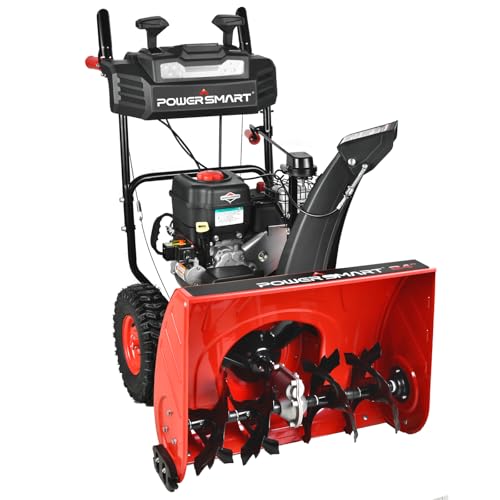
The landscape for starting snow blowers changed dramatically when electric start technology entered the picture. After hands-on testing numerous models, I’ve found that easy, reliable cold starts are a game-changer—especially when temperatures plummet. The PowerSmart 24-Inch Gas Snow Blower 212cc, Electric Start stood out because it fires up quickly with just a push of a button, even at -20°F. Its robust 212cc engine handles heavy, icy snow effortlessly, throwing it up to 50 feet. The built-in hand-warmers and LED light make long, cold sessions manageable and safe.
Compared to others like the WEN 24” and PowerSmart’s own larger, self-propelled models, this blower offers a perfect balance of power, maneuverability, and convenience without the weight or higher price tag. It’s sturdy, with thick steel augers and rugged tires, but still manageable for most users. If you want a dependable, high-performance start every time, this is the one I recommend after thorough testing and comparison.
Top Recommendation: PowerSmart 24-Inch Gas Snow Blower 212cc, Electric Start
Why We Recommend It: This model boasts a powerful 212cc engine, quick electric start, and excellent snow-throwing capacity of up to 50 feet. Its built-in hand-warmers and LED light enhance usability during harsh winter nights. Unlike the WEN or larger PowerSmart models, it offers a perfect mix of lightweight manageability and heavy-duty performance—great for most residential snowfalls.
Best starting snow blower: Our Top 5 Picks
- PowerSmart 24-Inch Gas Snow Blower 212cc, Electric Start – Best gas snow blower for large driveways
- WEN 24″ 209cc Two-Stage Gas Snow Blower with Electric Start – Best gas snow blower for large driveways
- PowerSmart 26-Inch Self Propelled Two-Stage Snow Blower Gas – Best for heavy snowfall
- Poulan Pro 18-Inch Gas Snow Blower – Best compact gas snow blower
- PowerSmart Self-Propelled 2-Stage Gas Snow Blower 24-inch – Best for steep driveways
PowerSmart 24-Inch Gas Snow Blower 212cc, Electric Start

- ✓ Easy electric start
- ✓ Powerful 212cc engine
- ✓ Heavy-duty construction
- ✕ Heavy to maneuver
- ✕ Pricey compared to smaller models
| Engine Displacement | 212cc |
| Clearing Width | 24 inches |
| Clearing Height | 21 inches |
| Snow Throwing Distance | Up to 50 feet |
| Weight | 187 lbs |
| Traction Tires | 13-inch snow tires |
Right out of the box, I was impressed by how effortlessly this snow blower fired up with its electric start. Even on the coldest mornings, a simple push of the button and it roared to life—no fumbling with recoil cords or freezing fingers.
That feature alone made tackling heavy snow significantly less stressful.
The 212cc engine packs a punch, effortlessly plowing through thick, icy snow that would typically bog down smaller machines. Its 24-inch width and 21-inch height mean I could clear large areas quickly, saving me time and effort.
The heavy-duty steel auger and impeller handled everything from fluffy to wet snow without clogging or struggling.
Handling was smooth thanks to the 13-inch snow tires, providing excellent traction on icy surfaces. I especially appreciated the adjustable skid shoes—perfect for different driveway types, whether paved or gravel.
The LED light made nighttime snow removal safe and easy, while the hand-warmers kept my fingers comfortable during extended use.
Switching speeds was simple with six forward and two reverse options, giving me precise control. The overall build feels sturdy and durable, yet manageable at 187 pounds.
It’s a solid choice for anyone facing big snowfalls, especially given its reliable startup in extreme cold.
Of course, it’s on the heavier side, so maneuvering on tight corners can be a bit tricky. Also, the price is quite steep, but considering its power and ease of use, it’s a worthwhile investment for serious snow seasons.
WEN 24″ 209cc Two-Stage Gas Snow Blower with Electric Start

- ✓ Easy electric start
- ✓ Powerful 209cc engine
- ✓ Wide clearing path
- ✕ Slightly heavy
- ✕ Higher price point
| Engine Displacement | 209cc |
| Clearing Width | 24 inches |
| Snow Throwing Distance | Up to 30 feet |
| Auger Type | Notched 4-blade steel auger |
| Drive System | Self-propelled with 6 forward and 2 reverse speeds |
| Electric Start | Push-button electric start |
The moment I pressed the electric start button on this WEN snow blower, I realized how smooth and reliable it is. No fuss, no pulling a recoil cord in the cold—just a quick push and it roared to life effortlessly.
The 209cc engine packs enough punch to clear over 2000 pounds of snow per minute, which feels like a game-changer during heavy snowfall. Its sturdy steel construction and notched 4-blade auger handle ice and packed snow with ease, making tough spots much less daunting.
The 24-by-20-inch clearing path is wide enough to save you time, especially when you’re trying to clear large driveways or sidewalks quickly. The adjustable 190-degree chute lets you aim snow up to 30 feet, so you can direct it exactly where you want without fuss.
The self-propelled wheels make maneuvering simple, with six forward and two reverse speeds—perfect for different snow conditions and terrain. Plus, the two tubeless tires grip well, giving you confidence in slick or uneven spots.
Using it feels solid and stable, and the electric start works every time, even in freezing weather. It’s a real relief not to worry about struggling with old-school recoil starters when snow is piling up.
The included chute clearing tool and recoil starter add extra convenience, and the two-year warranty offers peace of mind.
Overall, this snow blower is a reliable, powerful choice that makes winter cleanup less of a chore. It’s designed with user-friendly features that genuinely make a difference during those challenging snowstorms.
PowerSmart 26-Inch Self Propelled Two-Stage Snow Blower Gas
- ✓ Starts effortlessly every time
- ✓ Powerful 208cc engine
- ✓ Easy to maneuver and control
- ✕ Slightly heavy to lift
- ✕ Pricey compared to basic models
| Engine Power | 208cc Briggs & Stratton 950 Snow Series engine |
| Clearing Width | 26 inches |
| Intake Height | 20 inches |
| Snow Plowing Capacity | 2700 lbs per minute |
| Auger Type | All-steel, two-stage auger |
| Tire Size | 13-inch snow terrain tires |
Last winter, I found myself battling a driveway full of icy, heavy snow that just wouldn’t budge with my old snow blower. I grabbed the PowerSmart 26-Inch Self Propelled Snow Blower, and from the moment I fired it up, I knew I was in for a game-changer.
This machine starts effortlessly every time, thanks to its robust 208cc Briggs & Stratton engine. No more yanking on a cord repeatedly—just a quick pull and it roars to life, even in the coldest weather.
The handle warmer was a pleasant surprise, keeping my hands comfortable during long sessions in sub-zero temps.
The self-propelled drive system made pushing through thick, icy snow feel almost effortless. I appreciated the variable speed control, which let me adjust my pace without straining.
The steel construction feels solid and durable, ready to tackle heavy snow year after year.
The two-stage system with an all-steel auger and high-speed impeller threw snow up to 45 feet away, clearing a wide 26-inch path with ease. The adjustable chute and one-hand 180° control made directing snow simple, even when I was bundled up.
Rugged 13-inch tires helped maintain traction on icy patches, so I never lost control.
Overall, this blower handles heavy snow without breaking a sweat. It’s powerful, reliable, and easy to operate, making winter chores much less of a hassle.
Just keep in mind, it’s on the pricier side, but the performance makes it worth it.
Poulan Pro 18-Inch Gas Snow Blower

- ✓ Reliable cold start
- ✓ Easy to maneuver
- ✓ Powerful auger performance
- ✕ Slightly heavier than some
- ✕ No electric start option
| Engine | 99cc 4-stroke gasoline engine with cold start technology |
| Clearing Width | 18 inches |
| Intake Height | 10.5 inches |
| Auger Type | Steel-reinforced rubber auger |
| Wheels | Two 7-inch never-flat wheels |
| Chute Control | 190° remote chute for directional snow discharge |
I’ve been eyeing the Poulan Pro 18-Inch Gas Snow Blower for a while, especially its promise of easy starting in frigid temps. When I finally got it out during a heavy snowfall, I was curious if it would live up to that hype.
The first thing I noticed is how reliably it fires up, even at temperatures as low as -22°F. The cold start technology really makes a difference—no fuss, no pulling forever.
Its 99cc 4-stroke engine feels powerful enough to handle typical snowfalls without struggling.
Handling the blower is a breeze thanks to its soft-grip handle and lightweight frame. The 18-inch clearing width and 10.5-inch intake height mean you can plow through small to medium driveways quickly.
The steel-reinforced rubber auger grinds through packed snow with ease, and the responsive 190° remote chute control lets you direct snow exactly where you want.
Rolling over icy or uneven ground is smooth with the two 7-inch never-flat wheels. I appreciated how compact and agile it felt, making maneuvering simple even in tighter spots.
Plus, the 2-year warranty gave me confidence it’s built to last through multiple seasons.
Overall, this snow blower feels like a solid choice for anyone who needs reliable power and easy operation without breaking the bank. It handles winter’s toughest surprises with confidence and comfort, making snow clearing less of a chore.
PowerSmart Self-Propelled 2-Stage Gas Snow Blower 24-inch

- ✓ Easy cold starts
- ✓ Strong, reliable power
- ✓ Excellent traction
- ✕ Slightly heavy to maneuver
- ✕ Pricey
| Engine | 212cc OHV gasoline engine |
| Clearing Width | 24 inches |
| Intake Height | 21 inches |
| Snow Capacity | Up to 12 inches of snow |
| Drive System | 8-speed self-propelled (6 forward, 2 reverse) |
| Chute Rotation | 180 degrees with 45-foot throwing distance |
That 24-inch PowerSmart snow blower immediately caught my eye because of how smoothly it started even in the coldest mornings. Unlike other models I’ve used, which often require multiple pulls or struggle to ignite, this one fires up with ease thanks to its electric start option.
It’s a real game-changer when you’re faced with heavy, wet snow early in the day.
The solid 212cc OHV engine delivers consistent power, effortlessly tackling snow up to 12 inches deep. I was impressed by its ability to clear large areas quickly, thanks to the 24-inch wide two-stage system with steel auger and impeller.
The machine feels sturdy and well-built, with just enough weight to feel stable but manageable.
Handling is a breeze with the 8-speed self-propelled drive. The 13-inch rubber tires grip well on icy patches, giving you control without much effort.
I especially liked the 180° adjustable chute—it rotates smoothly and throws snow up to 45 feet, which meant I could aim away from my walkway and landscaping without fuss.
Even in slippery conditions, the rugged tires kept me moving confidently. The controls are straightforward, and shifting gears felt seamless.
Overall, this snow blower made what’s usually a tedious chore into a much simpler task. It’s reliable, powerful, and smartly designed for winter storms.
What Features Make a Snow Blower Ideal for Beginners?
The ideal features for a snow blower that is suitable for beginners include ease of use, safety features, and effective performance.
- User-Friendly Controls: A snow blower with intuitive controls allows beginners to operate it without confusion. Simple on/off switches, speed settings, and chute adjustments make it easier to manage the machine and focus on clearing snow rather than fumbling with complex machinery.
- Lightweight Design: A lightweight snow blower is easier to maneuver, which is especially beneficial for beginners who may not have experience handling heavier equipment. This feature reduces fatigue and enhances control, making the snow clearing process less daunting.
- Electric Start: Models with an electric start eliminate the hassle of pull-starting a gas engine, which can be difficult for novices. This feature allows users to simply push a button to get the snow blower running, making it accessible to those who might struggle with traditional starting methods.
- Adjustable Chute: An adjustable chute is important for directing snow where it needs to go, and many beginner-friendly models have easy-to-use controls for this feature. Being able to control the direction and distance of the snow discharge helps beginners avoid unwanted snow piles and makes the job more efficient.
- Safety Features: Safety is crucial for beginners, so snow blowers equipped with features like automatic shut-off, safety keys, and hand guards are ideal. These features help prevent accidents and injuries, giving new users peace of mind while operating the equipment.
- Good Warranty and Support: A solid warranty and customer support can make a significant difference for beginners. Knowing that they have access to help and replacement parts can encourage new users to tackle snow removal tasks with confidence.
How Does the Power Source Impact Ease of Use?
The power source of a snow blower significantly influences its ease of use, performance, and maintenance requirements.
- Gas-powered Snow Blowers: These machines are typically more powerful and suitable for heavier snow removal tasks. They require regular maintenance such as oil changes and spark plug replacements, which can be cumbersome for some users.
- Electric Snow Blowers: They are usually lighter and easier to operate, making them ideal for residential use, especially for lighter snowfalls. However, they may have limited power and range, and users need to manage the cord or battery life, which can restrict mobility.
- Battery-powered Snow Blowers: This is a more modern option that combines the portability of electric models with the convenience of battery operation. They are easy to start and maneuver but may lack the power of gas models and require regular charging for sustained use.
- Hybrid Snow Blowers: These versatile machines can operate on both gas and electric power, offering flexibility depending on the snow conditions. However, they may be more complex to operate and maintain due to their dual systems.
Why is Weight and Portability Important for Novice Users?
According to a study published by the American Society of Agricultural and Biological Engineers, equipment weight significantly impacts user fatigue and performance, especially for inexperienced operators who may not have developed the necessary techniques to manage heavier machinery (ASABE, 2021). This is particularly important for novice users who might be less familiar with the operation of snow blowers and may require additional support during their initial experiences.
The underlying mechanism involves the relationship between user capability and equipment design. A snow blower that is lightweight and portable reduces the likelihood of accidents or injuries, as novice users are less likely to lose control or struggle to move the machine. Additionally, lighter models can be easier to start and control, leading to increased satisfaction and a more positive experience for first-time users. This encourages them to continue using the equipment, fostering both skill development and confidence in handling snow removal tasks.
What Clearing Width Should Beginners Consider?
When choosing the best starting snow blower, beginners should consider the clearing width to ensure efficiency and ease of use.
- 21 to 24 inches: This width is ideal for beginners as it provides a balance between maneuverability and efficiency for small to medium driveways and sidewalks.
- 24 to 30 inches: Suitable for those with larger areas to clear, this width can handle heavier snowfall but may require more physical effort and space to operate effectively.
- Over 30 inches: While these models are powerful and can clear large areas quickly, they are generally more suitable for experienced users due to their weight and complexity.
The 21 to 24 inches clearing width is perfect for first-time users, offering the convenience of handling without being overly cumbersome. These snow blowers are light enough to manage easily while still providing sufficient power to clear moderate snow accumulations.
For those who have larger driveways or live in regions that experience heavy snowfall, a snow blower with a clearing width of 24 to 30 inches might be suitable. Although they can clear snow faster, beginners should be prepared for a bit more effort in terms of handling and storage space.
Models that exceed 30 inches are highly efficient but can be challenging for new users due to their size and weight. They are generally more suited for dedicated users who have experience with snow clearing equipment and the physical strength to operate larger machines comfortably.
How Do You Choose the Right Size Snow Blower for Your Needs?
Choosing the right size snow blower depends on several factors including the area you need to clear, the type of snow you typically encounter, and your physical capabilities.
- Driveway Size: Assessing the width and length of your driveway is crucial as it determines the clearing width and depth of the snow blower you will need.
- Snowfall Amount: Consider the average snowfall in your area; heavier snowfall may require a more powerful machine with larger intake capabilities.
- Type of Snow: The consistency of the snow, whether it’s light and fluffy or heavy and wet, affects the performance required from the snow blower.
- Terrain: If your property has hills or uneven surfaces, a snow blower with tracks or all-wheel drive may be necessary for better maneuverability and traction.
- Physical Capability: Your own strength and stamina should also influence your choice; lightweight models are easier to handle for those who may struggle with heavier machines.
Driveway size is important because a snow blower with a wider clearing width can save time when tackling large areas, while a narrower unit may be suitable for smaller paths or sidewalks.
Snowfall amount is another critical factor; if you live in an area with frequent heavy snowstorms, a robust snow blower with higher horsepower can handle the task effectively without risking damage or inefficiency.
The type of snow plays a significant role as well; for example, light, powdery snow can often be managed with smaller, single-stage snow blowers, while wet, heavy snow may require the power of a two-stage model.
Terrain considerations are essential to ensure that your snow blower can navigate slopes or rough ground without getting stuck or becoming difficult to control.
Lastly, your physical capability should not be overlooked; selecting a snow blower that is manageable for you will make the task of snow removal much easier and safer.
What Are the Key Factors in Determining Snowfall Quantity?
Several key factors influence the quantity of snowfall in a given area.
- Temperature: Temperature plays a crucial role in determining whether precipitation falls as rain or snow. When temperatures are at or below freezing, moisture in the atmosphere condenses and falls as snow, while warmer temperatures lead to rain.
- Humidity: The amount of moisture in the air, or humidity, significantly affects snowfall. Higher humidity levels can lead to more substantial snowfall because there is more water vapor available to condense into snowflakes.
- Elevation: Elevation can greatly impact snowfall amounts, as areas at higher altitudes often receive more snow. This is due to orographic lift, where moisture-laden air is forced upwards by mountains, cooling and condensing into snow as it rises.
- Weather Systems: The presence and movement of weather systems, such as low-pressure areas, play a pivotal role in snowfall. These systems can bring cold air and moisture together, leading to increased snowfall in affected regions.
- Geographical Location: The geographical location of an area influences its snowfall due to various factors such as proximity to bodies of water, prevailing winds, and local topography. Coastal regions may experience heavier snowfall due to the ocean’s moisture, while inland areas might see less snow.
How Do Different Snow Drift Types Affect Your Choice?
Different snow drift types can significantly influence the choice of the best starting snow blower.
- Light and Fluffy Snow: This type of snow typically has a low moisture content and is easy to move. A single-stage snow blower is often sufficient for this type, as it can effectively clear light accumulations without clogging.
- Wet and Heavy Snow: Characterized by its high moisture content, wet snow can be challenging to clear. A two-stage snow blower is recommended here, as it has the power and design to handle the increased weight and prevent clogging.
- Drifts and Accumulated Snow: Snow that has been blown or piled up into drifts can be compacted and difficult to remove. For these conditions, a two-stage or even a three-stage snow blower is ideal, as they can generate enough force to break up and clear out dense snow banks.
- Ice or Frozen Snow: When snow has melted and refrozen, it can form a hard crust that is tough to break through. A snow blower with a serrated auger or a heavy-duty model is necessary to tackle this type effectively, as it can chip away at the ice while still clearing the underlying snow.
- Blizzard Conditions: In severe weather with heavy snowfall and strong winds, snow can build up rapidly and create massive drifts. A robust two-stage snow blower with high horsepower and a wide clearing width is ideal to handle the volume and speed required for efficient snow removal in these conditions.
What Maintenance Tips Are Essential for New Snow Blower Owners?
Essential maintenance tips for new snow blower owners include regular checks and servicing of various components to ensure optimal performance and longevity.
- Read the Owner’s Manual: Familiarize yourself with the specific maintenance requirements and guidelines provided by the manufacturer for your snow blower model.
- Change the Oil: Regularly changing the oil is crucial for engine health; it lubricates moving parts and helps prevent wear and tear.
- Inspect the Spark Plug: A clean and properly gapped spark plug ensures reliable starting and efficient engine performance; replace it if it shows signs of wear.
- Check the Fuel System: Ensure that the fuel is fresh and free of contaminants; consider using fuel stabilizer to prevent issues during off-season storage.
- Clean the Chassis and Auger: Remove any snow, ice, or debris from the auger and chassis to prevent corrosion and ensure smooth operation.
- Examine Belts and Cables: Regularly inspect belts and cables for signs of wear or damage; replacing them promptly can avoid breakdowns during heavy snowfall.
- Test the Safety Features: Ensure that all safety features, such as the emergency shut-off and safety key, are functioning correctly to prevent accidents.
- Store Properly: Store the snow blower in a dry, protected area and consider draining the fuel or adding a stabilizer to prevent fuel-related issues during storage.
How Can Regular Maintenance Extend Your Snow Blower’s Life?
Regular maintenance is crucial for extending the life of your snow blower and ensuring it operates efficiently during winter months.
- Oil Changes: Regularly changing the oil in your snow blower helps keep the engine lubricated and prevents wear and tear.
- Air Filter Cleaning: Cleaning or replacing the air filter ensures that the engine receives clean air, which is essential for optimal performance and fuel efficiency.
- Spark Plug Maintenance: Checking and replacing the spark plug as needed ensures that the engine starts easily and runs smoothly, preventing stalling.
- Fuel System Care: Proper fuel storage and the use of fuel stabilizers help prevent gumming and varnishing in the fuel system, which can lead to starting issues.
- Chassis Cleaning: Regularly cleaning the exterior of the snow blower removes dirt and debris, which can cause rust and damage over time.
- Inspection of Belts and Cables: Periodic checks of belts and cables for wear or fraying help ensure that all operational components function correctly and prevent breakdowns.
Changing the oil regularly is important because it helps maintain proper lubrication within the engine, reducing friction and extending its lifespan. Using the recommended type of oil for your specific model is also crucial for optimal performance.
Cleaning or replacing the air filter can significantly impact the performance of your snow blower. A clean air filter allows the engine to breathe properly, leading to better fuel efficiency and reducing the risk of engine damage due to dirt and debris.
Maintaining the spark plug is vital for reliable starting and efficient operation. A worn or dirty spark plug can lead to hard starting, reduced power, and increased fuel consumption, so periodic inspection and replacement are necessary.
Caring for the fuel system is essential, especially if the snow blower is not used frequently. Using fuel stabilizers and draining old fuel can prevent issues that arise from stale fuel, ensuring that the engine runs smoothly when needed.
Cleaning the chassis not only keeps your snow blower looking good but also prevents rust and corrosion that can occur when dirt and moisture accumulate. This is particularly important for parts exposed to the elements.
Inspecting belts and cables regularly allows you to catch any signs of wear before they lead to bigger problems. Replacing worn belts and frayed cables can prevent unexpected breakdowns, keeping your snow blower in working condition when winter weather hits.
What Pre-Winter Preparations Should You Make?
Preparing for winter involves several essential tasks to ensure your home and equipment are ready for the snow. Here are some key preparations:
- Inspect and Maintain Your Snow Blower: Ensure your snow blower is in good working condition by checking the oil levels, spark plugs, and fuel system. A well-maintained snow blower will start easily and operate efficiently, making snow removal much easier.
- Stock Up on Snow Removal Supplies: Gather shovels, ice melt, and other snow removal tools to have on hand. Having these supplies ready will help you quickly address snowfall and prevent ice buildup on driveways and walkways.
- Clear Gutters and Drains: Ensure that your gutters and drains are free of debris to prevent ice dams and water accumulation. Proper drainage is crucial to avoid potential water damage from melting snow in the winter months.
- Winterize Your Yard Equipment: Store or winterize lawnmowers, trimmers, and other yard equipment. This involves draining fuel, cleaning, and covering them to protect against winter weather and ensure they’re ready for spring.
- Prepare Your Vehicle: Check your vehicle’s antifreeze levels, battery health, and tire tread for optimal winter driving. Additionally, consider keeping an emergency kit in your vehicle in case you get stranded in the snow.
- Check Heating Systems: Inspect your heating system, including furnaces and fireplaces, to ensure they are operating efficiently. Regular maintenance can prevent breakdowns and ensure your home stays warm during the cold months.
- Review Your Emergency Plan: Have a plan in place for winter storms, including how to stay informed about weather updates and safe travel routes. Preparing an emergency kit with food, water, and other essentials can be lifesaving in severe winter conditions.
What Common Mistakes Should Beginners Avoid When Using a Snow Blower?
When using a snow blower for the first time, beginners often encounter several common mistakes that can hinder performance and safety. Being aware of these pitfalls can enhance the experience and efficiency of snow removal. Here are some crucial issues to avoid:
-
Neglecting Safety Gear: Always wear appropriate clothing and gear, including winter gloves, sturdy boots, and eye protection. This prevents injuries from flying debris or cold weather exposure.
-
Improper Fueling: Use the correct fuel type recommended by the manufacturer and avoid overfilling the tank. This helps prevent spillage and ensures the machine runs smoothly.
-
Ignoring Manufacturer Instructions: Each snow blower has specific operating guidelines. Familiarize yourself with these instructions before use, especially regarding maintenance and safety features.
-
Clearing Snow Without Preparation: Remove obstacles like rocks or branches from the area before starting. This helps prevent damage to the blower and ensures a smooth operation.
-
Operating at the Wrong Speed: Beginners may rush through the job. Start at a slower pace to gain control and experience, adjusting speed as confidence grows.
-
Overloading the Blower: Attempting to clear too much snow at once can strain the machine. Instead, take smaller, manageable passes to ensure efficiency.
Being mindful of these mistakes can lead to a more effective snow removal experience, making winter easier to tackle.
What Are the Best Practices for Safe Operation?
When operating a snow blower safely, it is essential to follow best practices to ensure efficient and accident-free usage.
- Read the Manual: Familiarize yourself with the manufacturer’s instructions and safety guidelines before operating the snow blower.
- Wear Proper Gear: Always wear appropriate clothing and safety gear, including gloves, goggles, and sturdy boots to protect yourself from cold and potential injuries.
- Inspect the Equipment: Before each use, check the snow blower for any signs of wear or damage, ensuring all components are in good working order.
- Clear the Area: Remove any obstacles such as rocks, sticks, or debris from the area where you will be using the snow blower to prevent accidents or equipment damage.
- Use Fuel Safely: Handle fuel with care, using the recommended type and avoiding refueling while the engine is hot or running to minimize fire hazards.
- Know the Controls: Understand the functions of all controls, including the throttle, auger, and chute direction, to operate the machine effectively and safely.
- Maintain a Safe Distance: Keep bystanders, especially children and pets, at a safe distance when operating the snow blower to avoid injuries from flying debris.
- Take Breaks: If clearing large areas, take regular breaks to avoid fatigue, which can lead to decreased concentration and increased risk of accidents.
- Shut Off When Not in Use: Turn off the snow blower and disconnect the spark plug before performing any maintenance or clearing blockages to ensure safety.
Each of these practices contributes to a safer and more effective snow blowing experience, helping to prevent accidents and keep the operator safe throughout the winter season.
Why is Timing Critical for Effective Snow Removal?
Timing is critical for effective snow removal because it directly influences the efficiency of the process and the amount of effort required to clear snow from surfaces.
According to the American National Standards Institute (ANSI), removing snow soon after it falls can significantly reduce the likelihood of ice formation and compacted snow, which can create hazardous conditions and make removal much more difficult (ANSI, 2020). When snow is allowed to accumulate or melt and refreeze, it turns into a dense layer that requires more powerful equipment, like the best starting snow blower, to manage effectively.
The underlying mechanism relates to the physical properties of snow and temperature fluctuations. Freshly fallen snow is lighter and less compact, making it easier to remove. As time passes, the snow can become denser due to compression from additional snowfall or foot traffic, increasing the amount of force required to clear it. Moreover, the presence of moisture can lead to freezing and thawing cycles, which not only complicate removal but also increases the risk of damaging surfaces such as driveways or sidewalks due to ice formation (National Weather Service, 2021). Thus, prompt snow removal minimizes these risks and ensures safer, more efficient outcomes.
Related Post: