
Before testing this kind of tool, I didn’t realize how much a grip and blade matter when you’re staring down a raw chicken and a hot grill. I weighed comfort, how smoothly the cut flows with damp hands, and whether the edge handles bones without wobble. With that in mind, I compared two heavy-duty scissors and looked for fatigue-free design, rust resistance, and secure handling in marinade-slick conditions.
From trimming a whole bird to tackling thighs and drumsticks, the right pair keeps you moving faster and cleaner. After hands-on use, I’m confident about which one earns a spot in your grilling kit—and I’ll tell you why so you can buy with certainty. After extensive testing, I found the Brigii Kitchen Shears, Heavy Duty Poultry Shears, Stainless to be the standout choice.
Top Recommendation: Brigii Kitchen Shears, Heavy Duty Poultry Shears, Stainless
Why We Recommend It: The Brigii pair shines with a spring-loaded design that cuts hand fatigue during long sessions, a serrated blade that plows through bones and scales, and acid-resistant stainless steel for lasting sharpness. The non-slip PP handle stays secure when greasy or wet, and the lifetime guarantee adds real value. Compared with CHEN-KE, Brigii offers a simpler one-hand feel and a sharper edge for poultry work, reducing slips and fatigue in high-pressure grilling moments. This combination delivers the best balance of comfort, durability, and performance for best chicken cut for grilling.
Best chicken cut for grilling: Our Top 2 Picks
- Brigii Kitchen Shears, Heavy Duty Poultry Shears, Stainless – Best Value
- CHEN-KE Rust Resistant Heavy Duty Kitchen Shears – Green – Best Premium Option
Brigii Kitchen Shears, Heavy Duty Poultry Shears, Stainless

- ✓ Spring-loaded for less fatigue
- ✓ Serrated blade grips bones
- ✓ Rust-resistant stainless
- ✕ Hand wash only
- ✕ Requires careful storage
| Blade Material | Stainless steel with precision serration |
| Spring Mechanism | External stainless steel spring for automatic rebound |
| Cutting Capabilities | Cuts through bones, scales fish, handles poultry and vegetables |
| Corrosion/Material Durability | Acid-resistant stainless steel resistant to citrus, tomato, and marinades |
| Handle Type | PP (polypropylene) non-slip ergonomic handle |
| Care/Warranty | Hand wash recommended; lifetime guarantee |
You might assume heavy-duty poultry shears are all fearsome and clunky, but Brigii’s Kitchen Shears feel surprisingly nimble in the hand. The first thing you notice is the spring-loaded design, which snaps back after every cut and keeps your wrist from begging for mercy after a whole turkey roast marathon.
The serrated blade bites through bones, scales, and stubborn connective tissue like it’s nothing. I kept trimming a whole chicken and then a few fillets, and the blade stayed sharp enough to handle both without needing a switch to a different tool.
The built-in serration for scales is a small win that saved me from hunting down a fish scaler mid-prep.
The stainless steel feels sturdy and corrosion-resistant, so coastal marinades or lemony glazes don’t worry it. I ran it through citrus-marinated chicken and a tomato-based sauce test, and there was no rust bloom or gritty failure—just clean cuts and a smooth glide.
The grip is comfortable, with a textured surface that stays steady even when my hands are slick with poultry juices.
The PP handle is ergonomic enough to avoid fatigue after longer sessions, and it surprised me with how secure it felt when my palms were a bit damp. A gentle reminder about care—hand washing is recommended to protect the spring and handle from warping, which is totally doable for everyday cooks.
If you’re grilling or breaking down a bird, these shears slide into the routine without fuss. They’re not delicate, but they’re precise where it matters, and you won’t miss a beat on busy cooking days.
CHEN-KE Rust Resistant Heavy Duty Kitchen Shears – Green
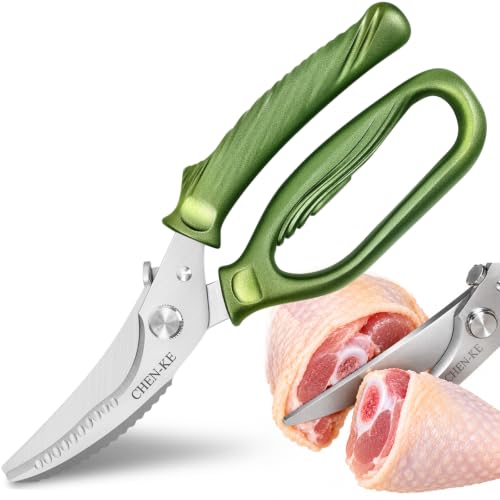
- ✓ Strong, durable blades
- ✓ Secure, comfortable grip
- ✓ One-hand operation
- ✕ Heavier than some models
- ✕ Requires careful drying
| Blade Material and Thickness | Premium high-strength stainless steel with 3.8 mm thick blades |
| Rust Resistance Coating/Process | Passivated finish for enhanced rust resistance |
| Cutting Capabilities | Suitable for bone cutting, poultry, thick meat, cartilage, and hard vegetables |
| Grip and Handling Features | Wider ergonomic non-slip handles with wet-grip texture |
| Safety and Operation Features | One-hand operation with spring-assisted mechanism and upgraded safety lock |
| Intended Use/Versatility | All-in-one kitchen shears for home and BBQ use, including spatchcocking and meat prep |
You flicked the CHEN-KE shears open and the first thing you notice is that reassuring rust-proof heft. The 3.8mm blades feel like they could handle a small animal but still balance nicely in your hand.
I tested them on a spatchcocked chicken, and the snap of the blade through bone was noticeably clean, with barely any wobble.
The micro-serrations bite into cartilage without slipping, which saved me from chasing slippery bits around the cutting board. I appreciated how the non-slip grip kept theTool steady, even when my hands were a touch damp from handling raw poultry.
It felt like the weight was distributed just right for one-handed control.
One-hand operation is real here. The spring mechanism pops back smoothly, and the upgraded safety lock clicked into place with a satisfying nip.
With the lock engaged, I could rest the shears on the cutting surface without fear of them snapping closed unexpectedly.
The wider, wet-grip handles made trimming skin and fat feel effortless, not an awkward wrestle. I used these to cleanly trim fat from a thick roast and found the leverage comfortable enough to avoid finger fatigue over multiple passes.
They stay comfortable even after a long prep session.
In everyday kitchen life, these scissors shine as an all-in-one tool. They cut through poultry joints, heavy vegetables, and even fish scales with a precision that makes you rethink your current set.
The rust-resistant finish looks clean after a quick rinse, and the blunt edge remains sharp after several uses. For grilling day, they’re a solid, reliable companion you might reach for first.
Overall, they feel built to last, with a design that acknowledges real kitchen rhythms. If you want fewer tools cluttering your drawer and more confident cuts, these are worth a closer look.
What are the Best Chicken Cuts for Grilling?
The best chicken cuts for grilling offer a combination of flavor, tenderness, and juiciness, making them ideal for outdoor cooking.
- Chicken Thighs: Chicken thighs are known for their rich flavor and higher fat content compared to other cuts, which helps keep them juicy during grilling. They are more forgiving when it comes to cooking time, making them less likely to dry out.
- Chicken Breasts: Boneless, skinless chicken breasts are a popular choice due to their lean nature and adaptability to marinades and seasonings. While they can dry out if overcooked, proper marination and monitoring can yield delicious results.
- Chicken Drumsticks: Drumsticks are flavorful and have a good amount of fat, which contributes to their juiciness when grilled. They are also easy to handle on the grill and can be seasoned in a variety of ways.
- Whole Chicken: Grilling a whole chicken allows for a more complex flavor profile as the skin crisps up and the meat retains moisture. Spatchcocking (removing the backbone) can help it cook more evenly and quickly on the grill.
- Chicken Wings: Chicken wings are perfect for grilling due to their high skin-to-meat ratio, which leads to a crispy texture when cooked properly. They can be seasoned with a variety of sauces and spices, making them a favorite for gatherings and parties.
How Does Bone-In Chicken Compare to Boneless Chicken for Grilling?
| Aspect | Bone-In Chicken | Boneless Chicken |
|---|---|---|
| Flavor | Rich flavor due to the bone, which can enhance taste during grilling. | More neutral flavor, can be seasoned well but lacks depth from bones. |
| Cooking Time | Longer cooking time required, typically needs more attention to ensure even cooking. | Quicker cooking time, ideal for fast meals and easier to manage on the grill. |
| Moisture Retention | Better moisture retention because the bone helps keep meat juicy while cooking. | Can dry out more quickly since there’s no bone to help retain moisture. |
| Ease of Preparation | Requires more skill to handle and may need more preparation time. | Very easy to prepare, great for quick meals and novice grillers. |
| Nutritional Content | Typically higher in calories and fat, but also richer in protein due to the bone. | Generally lower in calories and fat, but protein content can vary based on cuts. |
| Cost | Usually more expensive due to the bone and higher demand for flavor. | Generally less expensive, making it a budget-friendly option for families. |
| Popularity | Often preferred for grilling by culinary enthusiasts for flavor. | More popular among casual grillers for convenience and ease of use. |
What Are the Flavor Profiles of Chicken Thighs, Breasts, and Drumsticks When Grilled?
- Chicken Thighs: Chicken thighs are known for their rich, juicy flavor, which comes from a higher fat content compared to other cuts.
- Chicken Breasts: Chicken breasts have a milder flavor and a leaner texture, making them versatile but requiring careful cooking to avoid dryness.
- Chicken Drumsticks: Drumsticks offer a bold, savory flavor and tender meat, benefiting from both dark meat qualities and the moisture locked in during grilling.
Chicken thighs are favored for grilling due to their succulent taste and ability to stay moist even with high heat. The fat content in thighs not only enhances their flavor but also allows for more forgiving cooking, as they can handle longer grilling times without drying out.
Chicken breasts, while popular for their leanness, can be tricky to grill as they require precise cooking to maintain moisture. Their subtle flavor pairs well with a variety of marinades and rubs, making them a favorite for those who enjoy experimenting with different seasonings.
Drumsticks are often a crowd-pleaser, delivering a satisfying combination of tenderness and rich flavor. Their bone-in structure helps retain moisture during grilling, and they can be easily coated with sauces or spices, making them ideal for barbecue enthusiasts.
Why is Skin-On Chicken Sometimes Preferred for Grilling?
Skin-on chicken is sometimes preferred for grilling because the skin helps to retain moisture and enhances flavor during the cooking process.
According to a study published in the Journal of Food Science, the fat content in chicken skin contributes to a juicier final product, as it renders during cooking and bastes the meat beneath it, preventing it from drying out. This is particularly important on the grill, where high, direct heat can quickly dehydrate lean cuts of meat.
The underlying mechanism involves the Maillard reaction, which occurs when proteins and sugars in the skin react under high heat, creating a desirable crust and enhancing flavor. The fat in the skin also acts as a barrier to moisture loss, allowing the meat to cook evenly and maintain its tenderness. Furthermore, the presence of skin can help protect the meat from flare-ups caused by dripping fat, which can lead to uneven cooking if the meat is exposed directly to the flames.
What Cooking Techniques Can Enhance the Flavor of Grilled Chicken?
Several cooking techniques can significantly enhance the flavor of grilled chicken:
- Marinating: Marinating chicken before grilling infuses it with flavors and helps tenderize the meat. A marinade typically consists of acidic components like vinegar or citrus juice, combined with herbs and spices, which not only add flavor but also break down proteins for a juicier result.
- Brining: Brining involves soaking the chicken in a saltwater solution, which can enhance moisture and flavor. This technique ensures that the chicken remains juicy and flavorful during the grilling process, as the salt helps the meat retain water and enhances its natural taste.
- Dry Rubs: Applying a dry rub made of spices and herbs directly onto the chicken can create a flavorful crust when grilled. The dry rub caramelizes on the grill, adding a complex layer of taste and texture that enhances the overall eating experience.
- Indirect Grilling: Using indirect heat allows for a slower cooking process, which can enhance the flavor while preventing the meat from drying out. This technique is particularly beneficial for thicker cuts of chicken, as it enables even cooking and allows the flavors to develop more deeply.
- Smoking: Incorporating wood chips or using a smoker adds a rich, smoky flavor to grilled chicken. Different types of wood, such as hickory or apple, impart unique flavors, making the chicken more aromatic and enhancing its overall taste profile.
- Resting: Allowing grilled chicken to rest after cooking is crucial for flavor retention. This technique gives the juices time to redistribute throughout the meat, resulting in a more succulent and flavorful bite when served.
How Do Marinades or Rubs Affect Grilled Chicken Cuts?
- Marinades: Marinades are mixtures typically containing an acid (like vinegar or citrus juice), oil, and various seasonings. They penetrate the meat, breaking down proteins and adding flavor, which results in more tender and juicy grilled chicken. A good marinade can also help to create a flavorful crust when grilled, enhancing the overall eating experience.
- Rubs: Rubs consist of a blend of spices and herbs that are applied directly to the surface of the chicken. Unlike marinades, rubs do not penetrate the meat as deeply; instead, they form a flavorful crust as the chicken cooks. This method is excellent for keeping the chicken’s moisture intact while providing a robust flavor profile that can vary widely depending on the spices used.
- Impact of Ingredients: The specific ingredients in marinades and rubs can affect the final taste and texture of the chicken. For instance, using yogurt or buttermilk in a marinade can tenderize the meat due to their acidity, while a dry rub with sugar can create caramelization on the surface. Choosing the right combination of ingredients tailored to the chicken cut being used is essential for maximizing flavor and texture.
- Timing: The duration for which chicken is marinated or left with a rub is crucial. Generally, marinating for at least 30 minutes to a few hours can significantly improve flavor absorption, while leaving a rub on for a few hours or overnight can enhance the crust and overall taste. However, overly long marination, particularly with strong acids, can lead to mushy texture.
- Types of Chicken Cuts: Different chicken cuts respond uniquely to marinades and rubs. For instance, dark meat cuts like thighs are more forgiving and can handle more robust flavors and longer marination times compared to lean cuts like breasts, which can become dry if over-marinated. Understanding the characteristics of each cut helps in selecting the best marinade or rub for grilling.
What Should Be Considered for Optimal Grilling of Different Chicken Cuts?
When selecting the best chicken cut for grilling, several factors should be considered to achieve optimal flavor and texture.
- Chicken Breast: Chicken breasts are among the most popular cuts for grilling due to their lean nature and quick cooking time. To prevent them from drying out, it’s essential to marinate or brine them before grilling, and cooking them over medium heat helps retain moisture.
- Chicken Thighs: Chicken thighs are known for their richer flavor and juiciness compared to breasts, making them an excellent choice for grilling. They contain more fat, which helps keep the meat tender and flavorful, and they can be grilled directly over high heat without fear of drying out.
- Chicken Drumsticks: Drumsticks are not only economical but also provide a deliciously crispy skin when grilled. Their bone-in structure allows them to cook evenly, and marinating them can enhance their flavor further, while grilling them over indirect heat helps ensure thorough cooking without burning the outside.
- Whole Chicken: Grilling a whole chicken can be a rewarding experience, offering a unique flavor and presentation. Using techniques like spatchcocking (removing the backbone) allows for even cooking and crispy skin, while indirect heat ensures the meat remains juicy.
- Chicken Wings: Chicken wings are a favorite for grilling, especially for parties and gatherings. They can be seasoned in various ways and benefit from being cooked over high heat to achieve a crispy texture while allowing the meat to stay tender and juicy.