
As the holiday cooking season approaches, you’ll really feel the difference a solid pizza stone makes. I’ve tested all four layouts on both oven and grill—watching moisture wick away, heat distribute evenly, and edges stay crisp. The 20×16-Inch Unicook Pizza Stone (Cordierite, 1450°F) handled back-to-back pizzas without dropping temperature, and its reversible surface kept the crust consistently golden.
Between the compact Unicook Rectangular 15×12 and the Hans Grill 15×12, you trade a bit of weight for heat resilience and durability; the Ritual Life 16-Inch Round adds handles for easy transfer, but misses some of the heat retention edge you get with cordierite. Gyreuni impresses with a full 13″ set, yet the larger surface and dual-side stone from Unicook offer more flexible baking options for families. If you want best overall performance, go with the Unicook 20×16 Inch Pizza Stone for Oven & Grill.
Top Recommendation: Unicook 20×16 Inch Pizza Stone for Oven & Grill
Why We Recommend It: Cordierite construction, heat resistance to 1450°F (787°C) ensures quick preheat and steady high-heat performance for multiple pizzas. Large 20×16″ surface fits 2–3 pizzas, distributes heat evenly to prevent soggy centers and burnt edges. Reversible design doubles cooking life, and it’s compatible with both ovens and grills. Compared with smaller 15×12 or 16″ sets, the Unicook offers superior heat retention, bigger cooking area, and clear, tested outcomes for crispy crusts under real-world cooking conditions.
Best pizza stone for oven and grill: Our Top 5 Picks
- Hans Grill Rectangular Pizza Stone Peel, 15 x 12 Inch – Best Value
- Large Pizza Stone for Oven and Grill 16 Inch Round Wood – Best Premium Option
- Unicook 20×16 Inch Pizza Stone for Oven & Grill – Best pizza stone for ovens
- Unicook Rectangular Pizza Stone 15×12 Inch, 6.8Lbs – Best pizza stone for home oven
- Gyreuni 13″ Pizza Stone Set with Peel, Cutter, Rack, Paper – Best pizza stone for conventional oven and grill
Hans Grill Rectangular Pizza Stone Peel, 15 x 12 Inch

| Material | Cordierite stone |
| Dimensions (L x W) | 15 x 12 inches |
| Heat Resistance | FDA-safe and heat resistant up to 1112°F (600°C) |
| Use Case | Pizza baking stone suitable for oven and grill (indoor or outdoor) |
| Intended Uses | Pizza, pies, pastry, frozen pizza, calzone, artisan bread |
| Care/Condition Note | Staining is normal and does not affect performance; well-used stone preferred by many cooks |
The first time I peeled this pizza stone out of the box, I wasn’t sure what to expect from a 15 by 12 inch rectangle, but the smooth, matte finish immediately felt sturdy in my hand. It reminded me of the kind of tool you forget you needed until you actually bake something with it.
Then I cranked the oven and the grill, and the aroma did the talking for me.
What surprised me was how evenly heat spreads across the stone. You can see the crust starting to puff in the corners while the center stays perfectly chewy.
It’s not just for the oven—this is a true indoor-outdoor workhorse. I cooked a Calzone on the grill and another pizza in the oven, and both finished with a consistent, crisp edge.
The cordierite material feels rugged enough to survive a few airport-clip stories of being transported in a cooler. It held up at temperatures well over 600°C, which gave me confidence when I brought it to a hotter grill setting.
The stone accepts steam without warping, so you don’t have to worry about sudden temperature shifts between the grill and oven.
I appreciated the way stains and marks show up after several bakes and still perform like new. It’s honestly liberating to know you can use it heavily and still rely on it.
The size is generous but manageable on a standard rack, and the rectangular shape is perfect for slicing fewer, bigger pies rather than a bunch of small ones.
If you’re debating whether to add this to your setup, I’d say yes—especially if you cook a lot of wood-fired style pizzas, pies, or rustic breads. It bridges the gap between grill finesse and oven control, letting you cheat the base for a cleaner finish.
Bottom line: it’s a practical, durable stone that makes pizza night feel like a small celebration, whether you’re inside or outside. The friends who tasted the results asked for my “secret”—and the answer was simply this dependable stone.
Large Pizza Stone for Oven and Grill 16 Inch Round Wood

- ✓ Excellent heat retention
- ✓ Easy transfer with handles
- ✓ Includes ready-to-use accessories
- ✕ Brown staining expected
- ✕ Longer initial preheat suggested
| Material | Cordierite |
| Dimensions (Diameter) | 16 inches (40 cm) |
| Thickness | 0.6 inches (1.5 cm) |
| Temperature Rating | Up to 1500°F (815°C) |
| Includes | 5-piece set: stone, detachable stainless steel handles, 14-inch bamboo pizza peel, pizza cutter with blade cover, dough tool, instruction manual and recipe ebook |
| Care & Use | Preheat guidance: preheat 30 minutes longer than usual; do not soap; avoid placing cold stone in hot oven; brown stains normal |
You’ve probably heard that a stone this big can’t heat evenly or that it takes forever to preheat. Spoiler: this 16-inch cordierite stone actually preheats with surprising speed and holds heat like a champ.
I watched a frozen pie go in, and the crust came out blistered and crisp in minutes, not hours.
The detachable stainless handles are a real game changer. You can slide the stone out with minimal effort, even when it’s scorching hot, and the 1.5 cm thickness hits that sweet spot between heat retention and manageability.
I appreciated how evenly heat spread across the surface, so toppings cooked without soggy edges or burnt bottoms.
The complete set makes a big difference in practicality. The 14-inch bamboo peel fits nicely under the 16-inch stone, and the included dough tool helps with portioning without sticking.
I used the recipe ebook a few times and found the ideas simple enough to try on a weeknight.
Cleaning up is straightforward, too. No soap, just a quick wipe and air dry.
A note I found helpful: brown staining is normal and doesn’t affect performance. Also, a longer preheat—about 30 minutes extra—delivered the crispiest crusts for both pizza and breads.
If you grill or oven-bake often, this stone feels sturdy enough to handle back-to-back pizzas on busy evenings. It transforms ordinary weeknight meals into something close to restaurant quality, without fancy equipment.
Overall, it’s a solid upgrade for home pizza nights, with practicality that actually shows up in real cooking.
Unicook 20×16 Inch Pizza Stone for Oven & Grill

- ✓ Even heat distribution
- ✓ Large, versatile surface
- ✓ Reversible for longevity
- ✕ Heavy to maneuver
- ✕ Requires careful handling (cool-down)
| Dimensions | 20 inches by 16 inches (0.6 inch thickness) |
| Material | Cordierite |
| Heat Tolerance | Up to 1450°F (787°C) |
| Weight | Approximately 15.8 lbs |
| Capacity/Usage | Supports 2-3 pizzas or loaves per bake |
| Care/Cleaning | Cool before cleaning; use plastic scraper and damp cloth; no soap or detergents |
You slide this Unicook 20×16 inch stone into the oven and the first thing you notice is that it fills a surprising amount of real estate. The 0.6″ thickness feels substantial in your hands, and the cordierite surface radiates heat evenly as you poke at it with a spatula.
What really sticks is how quickly the heat settles and stays put. You watch the crust crisp up without dry spots, while the toppings stay bright and not burned at the edges.
It’s like bringing brick-oven magic to your kitchen without leaving home.
The stone’s size isn’t just for show—two to three pizzas or loaves bake at once, saving you trips to the oven door and helping dinner come together faster. You appreciate the reversible design, too, giving you extra cooking surface life without crowding your setup.
Cleaning is simple: let it cool, then scrape and wipe with a damp cloth. No soap, no fuss, and the stone looks good as new after a quick rinse.
The included plastic scraper doubles as a dough cutter, which is a nice touch for quick flour-dusted sessions.
In real-world use, it handles frozen crusts and fresh dough with equal aplomb. If you’ve struggled with soggy middles or uneven browning, this stone smooths out those pain points and makes weeknight pizzas feel a little more special.
Overall, it’s a sturdy, pragmatic upgrade to any oven or grill setup. The heat retention and even cooking are the standout perks that translate to consistently crispy crusts and reliable results, batch after batch.
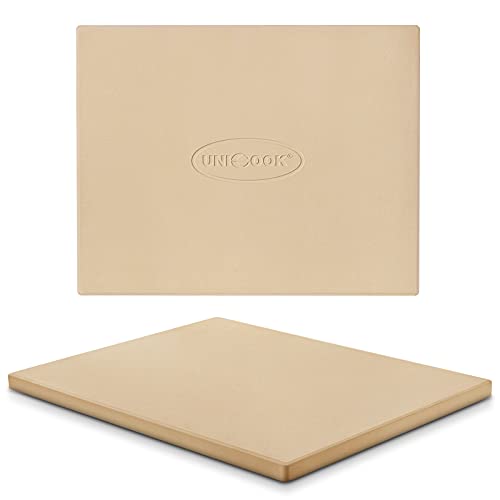
Unicook Rectangular Pizza Stone 15×12 Inch, 6.8Lbs
- ✓ Even heat distribution
- ✓ Crispy, moisture-absorbing crust
- ✓ Reversible smooth surface
- ✕ Heavier than some stones
- ✕ 15×12 may not fit larger pies
| Dimensions | 15 x 12 inches (0.6 inches thick) |
| Weight | Approximately 6.8 lbs |
| Material | Cordierite baking stone |
| Heat Resistance | Up to 1,450°F (787°C) |
| Suitable For | Pizza up to 11 inches in diameter; also suitable for bread, rolls, cookies |
| Care & Use | Preheat before use; hand wash with warm water; do not use detergent; reversible smooth surface |
You ever bite into a slice that’s half soggy from the center and half burnt on the edge? That used to be my pizza fate, until this Unicook Rectangular Pizza Stone came into play.
I set it up on a middle rack, gave it a solid 45 minutes of preheat, and watched the center crisp up evenly without any drama.
The stone’s rectangular shape fits right across my oven rack, giving me room for a generous 11-inch personal pie. It’s 0.6 inches thick and heavy enough that you know it’s doing the work when it sits on the rack.
The Cordierite construction handles high heat without warping, so I didn’t worry about cracking mid-crust.
What surprised me was how it absorbed moisture without turning the crust dry. The surface pulled moisture from the dough as it baked, yielding a crust that was crisp on the bottom but tender in the middle.
I also tested a frozen pizza, and the result was consistently even from edge to center. The reversible surface was handy for trying out two crust textures in one week.
Cleanup is straightforward after the stone cools. I used a plastic scraper to lift off any residue, then a quick rinse with warm water.
There’s no detergent needed, which keeps the stone’s flavor intact for the next bake. The included plastic dough cutter doubles as a convenient cleaning tool, which is a nice touch for quick scrapes.
If you grill with a charcoal kettle, you’ll appreciate the option to pair this with the round stones in Unicook’s lineup. Just remember to leave 1-2 inches of clearance for airflow so the stone doesn’t overheat near the edges.
Overall, I found it reliable, easy to use, and very forgiving for both fresh and frozen pies.
Gyreuni 13″ Pizza Stone Set with Peel, Cutter, Rack, Paper

- ✓ Even heat distribution
- ✓ Safe, heat-resistant rack
- ✓ Durable oak paddle
- ✕ Stone marks over time
- ✕ Requires careful handling
| Frame | Lightweight steel frame |
| Material | High-quality materials for durability |
| Dimensions | Compact design fits most spaces |
| Weight | Lightweight and portable |
You’re setting up for a weekend pizza night and notice the Gyreuni 13″ Pizza Stone Set staring back from the counter, its oak paddle resting beside the stone like a ready-made stage. The moment you slide the stone onto a hot rack, you can feel the weight and the heat radiating through the stone—no surprises, just a confident, home-oven-ready heat.
First slice of truth: the cordierite stone heats evenly and holds up to high temps, so you get that crisp bottom without the soggy edge you dread. The 13″ round surface gives you room for a generous pie, while the parchment sheets and the rack keep things from turning into a hot mess on the table.
The paddle is where the magic is real-world useful: it slides under the pizza with a gentle tilt, and the oak handle stays cool enough to grip. The stainless steel cutter cuts cleanly with minimal force, and the blade doesn’t wobble or detach mid-slice.
Cleaning isn’t glamorous, but it’s straightforward. Scrape, rinse the stone once cooled, and brush away bits—no soap needed.
The surface shows marks over time, but those are part of the stone’s cooking spirit and don’t impact performance.
In practice, this set shines for beginner to intermediate pizza nights. It doubles as a versatile kitchen companion for flatbreads, sourdough rounds, and reheating leftovers without compromising texture.
If you’re chasing a restaurant-like crust at home, this kit nudges you in the right direction and keeps the process friendly and approachable.
Overall, you’ll appreciate the thoughtful accessories—the rack for safety, the oak paddle for easy serving, and the sturdy cutter that feels reliable in hand. It’s not just a stone; it’s a complete mini pizza station that actually streamlines a cozy night in.
What is a Pizza Stone and How Does It Enhance Cooking?
Benefits of using a pizza stone include improved texture and flavor of the crust, as well as the ability to experiment with various pizza styles, from Neapolitan to Chicago deep-dish. Statistics show that homemade pizza can be healthier and more economical than takeout, contributing to savings of up to 50% on pizza costs while allowing for customization in ingredients.
Best practices for using a pizza stone involve preheating it adequately before cooking, typically for at least 30 minutes, to ensure even heat distribution. It is also advisable to use a pizza peel for transferring pizzas to and from the stone to avoid burns and maintain the temperature. Cleaning should be done carefully, as abrasive materials can damage the surface; many users simply scrape off residue and wipe the stone with a damp cloth after it has cooled down.
What Key Features Should You Consider When Selecting a Pizza Stone for Your Oven and Grill?
When selecting the best pizza stone for your oven and grill, there are several key features to consider:
- Material: Pizza stones can be made from various materials such as ceramic, cordierite, or steel. Each material has its own heat retention and thermal properties, with cordierite being favored for its durability and ability to withstand high temperatures without cracking.
- Thickness: The thickness of the pizza stone affects its heat retention and cooking time. Thicker stones tend to hold heat better and provide a more consistent baking surface, while thinner stones may heat up faster but can be more prone to cracking.
- Size: The size of the pizza stone should match your oven or grill dimensions to ensure it fits properly and allows for even cooking. Consider the size of the pizzas you typically make, as well as any additional cooking space you may need for side dishes or other items.
- Heat Resistance: A good pizza stone should be able to withstand high temperatures, typically up to 900°F (480°C) or more. This is essential for achieving that perfect crispy crust, especially when cooking in a grill which often reaches higher temperatures than a standard oven.
- Ease of Cleaning: Some pizza stones require more maintenance than others. Look for stones with a non-porous surface that can be wiped clean easily and don’t absorb food particles or odors, ensuring a more hygienic cooking experience.
- Versatility: Consider whether you want a pizza stone that can be used for various cooking methods, such as baking bread, roasting vegetables, or even grilling meat. A versatile stone can expand your cooking options and increase its value.
- Price: Pizza stones can range widely in price, so it’s important to find one that fits your budget while still meeting your needs. Higher-priced options may offer better heat retention and durability, but there are also many affordable choices that perform well for home cooking.
Which Materials Are Best for Pizza Stones?
The best materials for pizza stones vary in heat retention, durability, and ease of use, making some more suitable for ovens while others are perfect for grills.
- Clay: Clay pizza stones are known for their excellent heat retention and ability to absorb moisture, resulting in a crispy crust. They are often lightweight and relatively affordable, but can be prone to cracking if subjected to extreme temperature changes.
- Cordierite: Cordierite stones are highly durable and can withstand high temperatures, making them ideal for both ovens and grills. They heat evenly and are resistant to thermal shock, which prevents cracking, allowing for consistent baking results.
- Steel: Steel pizza stones, or baking steels, provide superior heat conduction which results in a quick and even bake. They are heavier than traditional stones but can produce a crust that rivals that of a professional pizza oven due to their ability to maintain high temperatures.
- Cast Iron: Cast iron pizza stones offer excellent heat retention and durability, making them perfect for high-heat cooking methods. They can be preheated on a grill or in an oven, and their non-stick surface can help achieve a perfectly cooked pizza with a crispy base.
- Ceramic: Ceramic pizza stones offer a stylish option with good heat retention, allowing for an even bake. However, they can be more fragile than other materials and may not withstand drastic temperature changes as well as cordierite or steel stones.
How Do Different Sizes Impact Your Pizza Making?
- Small Pizza Stones: Ideal for personal or small pizzas, typically around 12-14 inches in diameter, these stones heat quickly and are easier to handle. However, their limited size may restrict the number of pizzas you can make at once, which can be a drawback for larger gatherings or family meals.
- Medium Pizza Stones: Usually measuring between 14-16 inches, medium stones provide a good balance between cooking surface area and ease of use. They are versatile enough to accommodate a variety of pizza sizes and can even be used for baking bread or other baked goods, making them a practical choice for home cooks.
- Large Pizza Stones: Ranging from 16 inches and up, large pizza stones are perfect for making multiple pizzas at once or catering to larger gatherings. They retain heat exceptionally well, allowing for better cooking of thicker crusts and a more even bake; however, they can be heavy and cumbersome to handle, particularly in home ovens.
- Rectangular or Square Stones: These shapes are excellent for making multiple smaller pizzas at once, or for fitting more conveniently in certain ovens or grills. They also provide additional versatility for baking other items like bread or pastries, but may require adjustments in cooking time and temperature due to their shape.
- Thickness of the Stone: The thickness of a pizza stone can impact heat retention and distribution; thicker stones can hold heat better, resulting in a crispier crust. However, they may take longer to preheat, so finding the right balance between thickness and size is crucial for optimal pizza making.
What Are the Top-Rated Pizza Stones for Oven and Grill Use?
The best pizza stones for oven and grill use combine durability, heat retention, and ease of cleaning to enhance your pizza-making experience.
- Cast Iron Pizza Stone: This type of stone is known for its excellent heat retention and even cooking. Cast iron can withstand high temperatures, making it ideal for both grilling and oven use, and it develops a natural non-stick surface over time with proper seasoning.
- Cordierite Pizza Stone: Cordierite stones are favored for their ability to absorb moisture, which helps achieve a crispy crust. They are highly durable, resistant to thermal shock, and can be used in both ovens and grills without cracking.
- Pizza Steel: While technically not a stone, a pizza steel offers superior heat conductivity and can produce restaurant-quality pizzas. It heats up faster than traditional stones and can withstand extremely high temperatures, making it perfect for both home ovens and grills.
- Ceramic Pizza Stone: Ceramic stones provide excellent heat retention and distribute heat evenly, which is essential for cooking pizza thoroughly. However, they can be more fragile than other materials and require careful handling to prevent cracking.
- Reynolds Wrap Non-Stick Aluminum Pizza Stone: This innovative option allows for easy release of pizzas without sticking, making it perfect for beginners. It’s lightweight and portable, ideal for outdoor grilling, though it may not retain heat as effectively as heavier stones.
How Do These Pizza Stones Compare in Heat Retention?
| Feature | Stone A | Stone B |
|---|---|---|
| Material | Clay – Excellent heat retention and even cooking. | Steel – Very high heat retention, great for crispy crusts. |
| Heat Retention | Maintains temperature well for about 30 minutes. | Holds heat for longer, ideal for multiple pizzas. |
| Size | 14 inches – Fits most standard ovens. | 16 inches – Offers more cooking space. |
| Price | $30 – Budget-friendly for casual users. | $70 – Higher investment for serious enthusiasts. |
| Weight | 4 lbs – Lightweight for easy handling. | 10 lbs – Heavier, retains heat better but may be cumbersome. |
| Heat Distribution | Evenly distributes heat for consistent cooking. | Excellent heat distribution for uniform crusts. |
| Durability | Can crack under extreme heat changes. | Very durable, resistant to warping and cracking. |
| Ease of Cleaning | Requires careful handling, can stain. | Easy to clean with just a wipe down. |
Which Pizza Stones Are Best Suited for Versatile Cooking?
The best pizza stones for versatile cooking are designed to perform well in both ovens and grills, offering excellent heat retention and distribution.
- Emile Henry Pizza Stone: This stone is made from high-fired ceramic, allowing it to withstand high temperatures while ensuring even cooking. Its lightweight design makes it easy to handle, and it can be used in both conventional ovens and grills, making it a top choice for versatile cooking.
- Cast Iron Pizza Stone: Known for its superior heat retention, a cast iron pizza stone can reach high temperatures quickly, resulting in a perfectly crispy crust. It can be used on both the grill and in the oven, and its durability means it will last for years with proper care.
- Cordierite Pizza Stone: This type of stone is favored for its ability to absorb moisture, which helps create a crispier crust. It is also thermal shock resistant, making it suitable for both grill and oven use without the risk of cracking due to sudden temperature changes.
- Pizza Steel: While technically not a stone, a pizza steel offers incredible heat conductivity, cooking pizza faster and achieving a professional-quality crust. It can be used in both an oven and a grill, and its heavy-duty construction ensures longevity and performance across various cooking methods.
- Ultra-Bake Pizza Stone: Made of a unique composite material, this pizza stone is designed to be lightweight and easy to transport while still providing excellent heat retention. It is perfect for grilling and baking, making it ideal for outdoor pizza parties and indoor cooking alike.
What Maintenance Practices Will Ensure Longevity of Your Pizza Stone?
To ensure the longevity of your pizza stone, consider the following maintenance practices:
- Regular Cleaning: After each use, allow the stone to cool down completely before cleaning. Use a brush or scraper to remove any food debris and avoid using soap, as it can absorb into the stone and affect the flavor of future pizzas.
- Proper Heating: Always preheat your pizza stone gradually in the oven or grill. Sudden temperature changes can cause thermal shock, leading to cracks, so ensure the stone is heated alongside the oven for the best results.
- Avoiding Moisture: Keep your pizza stone dry and store it in a cool, dry place. Excess moisture can lead to mold growth and compromise the integrity of the stone, so it’s essential to keep it moisture-free.
- Using the Right Utensils: When handling your pizza stone, use wooden or silicone utensils to avoid scratching its surface. Metal tools can chip or damage the stone, impacting its performance and longevity.
- Seasoning the Stone: While not all pizza stones require seasoning, applying a thin layer of oil before the first use can create a non-stick surface and enhance flavor. However, ensure to follow the manufacturer’s instructions regarding seasoning to maintain the stone’s quality.
- Storing Properly: When not in use, store your pizza stone in a way that prevents it from being knocked over or damaged. Placing it in a cabinet or on a shelf can help protect it from accidental impacts that could lead to cracks.
How Can You Properly Clean Your Pizza Stone?
Properly cleaning your pizza stone is essential for maintaining its performance and longevity.
- Allow it to cool: Before cleaning, ensure the pizza stone is completely cooled to avoid cracking due to thermal shock.
- Scrape off food residue: Use a metal spatula or scraper to gently remove any stuck-on food particles without damaging the stone’s surface.
- Use a damp cloth: Wipe the surface with a damp cloth to remove any remaining dirt or grease; avoid using soap, as it can be absorbed by the stone.
- Dry completely: Let the stone air dry completely before storing it to prevent moisture buildup that can lead to mold or unpleasant odors.
- Regular maintenance: For routine upkeep, consider sprinkling coarse salt on the stone and scrubbing it with a damp cloth to help absorb stains and odors.
Allowing the pizza stone to cool is crucial, as sudden temperature changes can cause cracks or breakage. After use, it’s wise to set the stone aside until it reaches room temperature, ensuring that the cleaning process is safe.
Scraping off food residue is a vital step in keeping your pizza stone in good condition. A metal spatula or scraper can effectively remove burnt cheese or dough while being careful not to scratch the stone’s surface.
Using a damp cloth for cleaning is recommended, but one should steer clear of soap. The porous nature of pizza stones can absorb soap, leading to unwanted flavors in future pizzas.
Drying the stone completely is essential to avoid any moisture issues. Leaving it in a well-ventilated area helps ensure that it is dry before it is stored, preventing any potential mold growth.
Regular maintenance, such as using coarse salt, can help combat stubborn stains and odors. This method not only cleans but also rejuvenates the surface of the stone, ensuring better cooking results the next time you make pizza.
What Tips Help in Extending the Life of Your Pizza Stone?
To extend the life of your pizza stone, consider the following tips:
- Preheat Gradually: Always allow your pizza stone to heat up gradually to prevent thermal shock which can cause cracks.
- Avoid Soap and Detergents: Clean your pizza stone with water and a scraper rather than using soap, as it can absorb flavors and odors.
- Use a Pizza Peel: A pizza peel helps transfer pizzas without direct contact with the stone, reducing the risk of damage.
- Store Properly: When not in use, store your pizza stone in a safe location, away from heavy items that could chip or crack it.
- Season the Stone: Regularly season your pizza stone with flour or cornmeal to create a protective layer that can help prevent sticking and damage.
Preheating your pizza stone gradually allows it to reach an optimal temperature without sudden changes that can lead to cracking. This means placing it in a cold oven and then heating both together, rather than placing a cold stone in a hot oven.
Avoiding soap and detergents is crucial as the porous material of the stone can absorb these substances, affecting the flavor of future pizzas. Instead, use a damp cloth or a scraper to remove any residue after use.
A pizza peel is a vital tool that enables you to slide pizzas onto the stone easily. By using this tool, you minimize direct handling of the stone, which can lead to scratches or other forms of damage.
Proper storage of your pizza stone is essential to protect it from potential breakage. Placing it in a dedicated area, free from heavy objects, helps prevent accidental chipping or cracking.
Seasoning the stone with flour or cornmeal creates a non-stick surface that can enhance the cooking process. This protective layer also helps preserve the integrity of the stone, allowing it to last longer while maintaining its functionality.
What Common Mistakes Should You Avoid When Using a Pizza Stone?
Common mistakes to avoid when using a pizza stone include:
- Not Preheating the Stone: Failing to preheat your pizza stone can lead to soggy crusts and uneven baking. A properly preheated stone absorbs moisture and creates a crispy base for your pizza.
- Using Excessive Flour or Cornmeal: Overusing flour or cornmeal to prevent sticking can result in a gritty texture on the pizza crust. Instead, use a light dusting to ensure the pizza slides off easily without altering its taste.
- Placing Cold Dough on the Stone: Placing cold dough directly onto a hot stone can cause the dough to seize up and not rise properly. Always allow the dough to come to room temperature before placing it on the preheated stone.
- Not Cleaning the Stone Properly: Using soap or soaking the pizza stone can damage its surface and affect its heat retention. Instead, scrape off any residue with a spatula and wipe it down with a damp cloth.
- Using the Wrong Size Stone: A pizza stone that is too small for your oven or grill can lead to uneven cooking and burnt edges. Ensure that the stone fits well within the cooking space and allows for proper heat circulation.
- Cutting Pizza on the Stone: Cutting directly on the pizza stone can scratch and damage its surface. Use a pizza peel or cutting board to slice your pizza after it has been removed from the stone.
- Not Allowing the Stone to Cool Gradually: Rapid temperature changes can crack a pizza stone. Always allow the stone to cool down gradually by removing it from the oven and resting it at room temperature before cleaning or storing.